Hand-Forged vs Machine-Made: Why Iron Bed Craftsmanship Matters
By American Iron Beds · Handcrafting Iron Beds in Los Angeles Since 1999
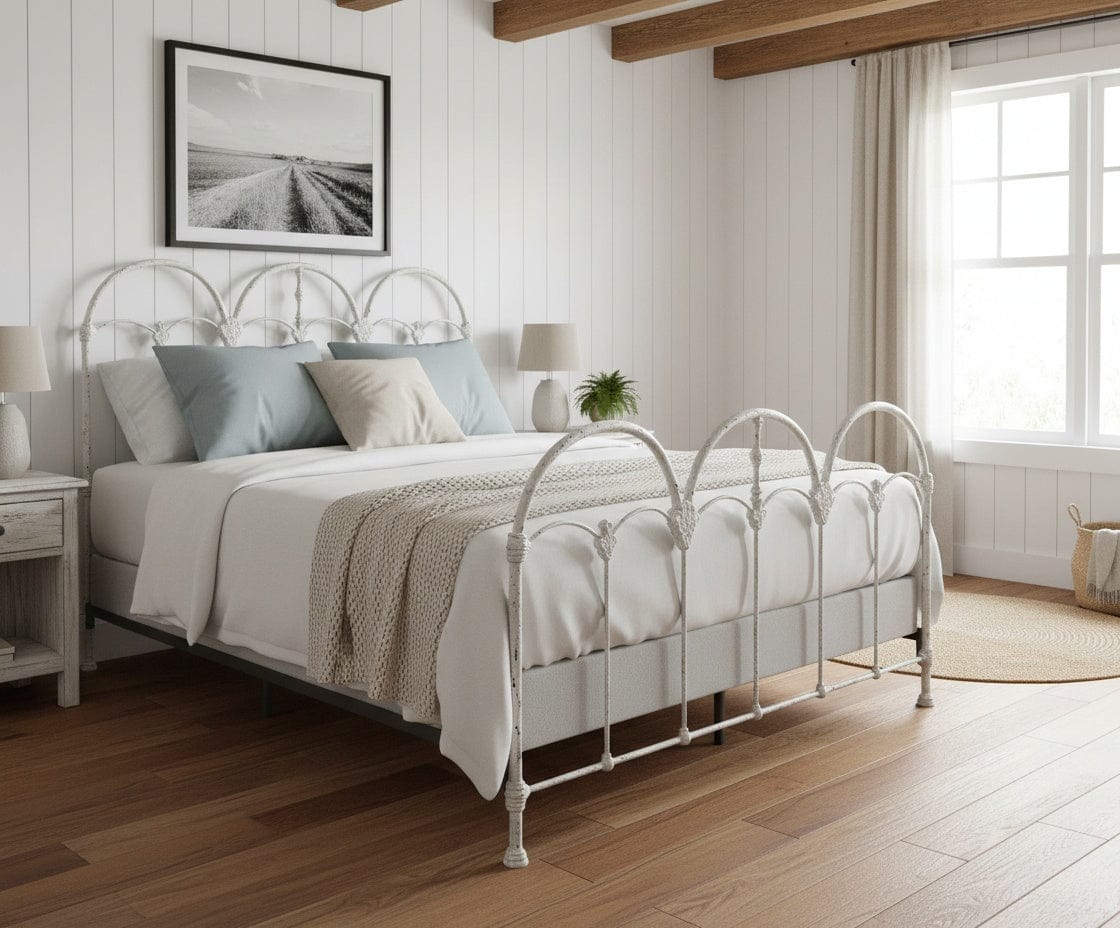
Not every iron bed is built the same way, and the differences aren't visible in a product photo. Two beds can look nearly identical on a screen. One will hold up for generations. The other will start squeaking within a year. The gap between the two comes down to one thing: how it was made.
To understand how iron beds have been built since the 1800s and why the original construction methods still matter, start with the history. We've spent 27+ years building iron beds by hand in Los Angeles by our manufacturing partners. We've also seen what comes back when customers buy mass-produced beds elsewhere and discover what they actually got. In this guide, we'll break down exactly what separates a handcrafted iron bed from a machine-made one so you can spot the difference before you spend a dollar.
What Does "Handcrafted" Actually Mean for an Iron Bed?
When we say handcrafted, we mean every structural joint is welded by a skilled metalworker, every casting is poured by hand, and every finish is applied by an individual artisan. It's not a marketing label. It describes a specific construction process.
A handcrafted iron bed starts as raw materials: thick-walled steel tubing, solid iron rod, and casting molds. The tubing is cut, bent, and welded into the headboard and footboard shapes. Each headboard becomes one solid welded piece. Each footboard becomes one solid welded piece. Then hand-poured molten metal castings are formed around the weld joints, reinforcing every connection while adding the decorative detail that gives the bed its character.
The frame that connects headboard to footboard is built in the same workshop, measured against the same bed. The tolerances are exact. The fit is tight. Nothing is outsourced, nothing is approximated, and nothing is left to chance.
How Are Machine-Made Iron Beds Different?
Machine-made iron beds follow a fundamentally different process designed to minimize cost per unit. The results look similar in a photo. They don't perform similarly in a bedroom.
Thinner materials. Mass-produced beds typically use thin-walled tubing or aluminum instead of thick-walled steel. Aluminum is lighter and cheaper, but it flexes under load. That flex is what creates the subtle movement that turns into creaking and squeaking over months of use.
Bolt-on castings. Instead of pouring molten metal around the weld joints (structural castings), machine-made beds attach pre-formed castings after assembly. They're screwed on, glued on, or press-fit. They look decorative. They add nothing structural. When the adhesive loosens or the screws shift, the rattle starts.
Mismatched frames. The frames on mass-produced beds are often made in a different factory, sometimes a different country, from the headboard and footboard. The tolerances don't match. The connection points are slightly off. Slight misalignment means slight movement. Slight movement means noise.
Spray-applied finishes. Factory finishes are applied by machine in a single uniform coat. They're consistent, but they're flat. There's no depth, no variation, no texture. They look like paint on metal because that's exactly what they are.
Side-by-Side: Handcrafted vs Machine-Made Iron Beds
| Feature | Handcrafted Iron Bed | Machine-Made Iron Bed |
|---|---|---|
| Tubing | Thick-walled steel (heaviest gauge in industry) | Thin-walled steel or aluminum |
| Castings | Hand-poured molten metal around weld joints (structural) | Pre-formed, screwed on or glued on (decorative only) |
| Headboard Construction | One solid welded piece | Multiple sections bolted together |
| Frame Origin | Built in same workshop as headboard/footboard | Different factory, often different country |
| Finish | Hand-applied by individual artisan (depth, texture, variation) | Machine-sprayed in single coat (uniform, flat) |
| Warranty | Lifetime structural | 1–5 years typical |
| Customization | Custom sizes, heights, finishes, and designs | Fixed sizes and colors only |
| Origin | American-made (Los Angeles, CA) | Typically imported (China, India, Vietnam) |
| Price Range | $800–$4,000+ | $150–$800 |
| Expected Lifespan | 50–100+ years | 3–10 years |
Why the Construction Method Matters More Than the Price Tag
A $200 iron bed and a $2,000 iron bed can look surprisingly similar in photographs. The difference is entirely in what you can't see: wall thickness, casting integrity, weld quality, frame precision, and finish depth.
Here's a useful mental model. Think of it like the difference between a hand-stitched leather shoe and a glued-together fast-fashion shoe. Both look like shoes. One lasts twenty years and gets better with age. The other falls apart in a season. The price difference reflects the material quality and construction time, not just a brand premium.
An iron bed built with structural castings, thick-walled steel, and one-piece welded construction is what defines a true heavy duty iron bed frame and will not degrade. The welded joints don't loosen. The steel doesn't flex. The castings reinforce rather than rattle. That's why we offer a lifetime structural warranty. We know what happens to these beds over decades, and the answer is: nothing. They hold.
What to Inspect Before You Buy
Whether you're shopping with us or comparing iron bed companies, here are the specific questions that separate quality from compromise.
Ask about tubing wall thickness. This is the single best indicator of structural quality. If a seller can't tell you the wall thickness of their tubing, they're reselling someone else's product and don't know the specs. Thick-walled steel is more expensive, heavier, and dramatically more rigid than thin alternatives.
Ask how the castings are attached. Poured around the joint means structural. Screwed on or glued on means decorative. This one detail predicts whether the bed will squeak.
Ask where the frame is made. If the frame comes from a different source than the headboard and footboard, the fit will never be as precise as components built in the same workshop. Our frames are built in the same Los Angeles factory as the beds they connect to.
Ask about the finish. Hand-applied finishes create unique character with every bed. Each one has subtle variations in tone and texture that add warmth and depth. Machine-sprayed finishes are technically consistent, but they lack the visual richness that makes a bed feel like furniture rather than hardware.
Ask about the warranty. A lifetime structural warranty means the manufacturer trusts the construction to hold indefinitely. A one-year or five-year warranty means they expect something to go wrong.
Hand-Applied Finishes: The Difference You Can See
Finish is the one area where the handcrafted advantage is visible immediately. Our artisans apply every finish by hand, building up layers of color, texture, and patina that machine sprayers can't replicate.
The hand-applied technique adds age, warmth, and dimension to the metal surface. Slight variations between beds aren't defects. They're the signature of a human hand. It's the same principle behind hand-rubbed wood finishes or hand-thrown pottery: the imperfection is the beauty.
We offer finishes across every style: matte black and charcoal for industrial looks, antique bronze and aged copper for traditional spaces, gloss white and soft cream for coastal and farmhouse bedrooms, and specialty options like rust patina, verdigris green, and two-tone metallic for something truly unique.
For our American Classics collection and Dream Gallery collection, you can request finish samples within two weeks of placing your order, so you can see and feel the finish before your bed goes into production.
Why We Build the Way We Do
We didn't choose this construction method because it's easy. Hand-poured castings, thick-walled steel, and one-piece welded assembly cost more in materials and take more time in labor than the machine-made alternative. These are the same markers of a quality iron bed that distinguish a handcrafted frame from a mass-produced one. We build this way because it's how iron beds were made in the late 1800s, and those beds are still standing 140 years later.
Our workshop in Los Angeles uses the same proven methods with modern improvements in metallurgy and finishing, and you can read more about why iron beds made in the USA outperform imports on materials, lead times, and warranty support. Every bed is made to order. Every headboard is one welded piece. Every frame is built to match the specific bed it connects to. And every bed ships with a lifetime structural warranty because the construction doesn't degrade.
If you're investing in an iron bed, make sure you're getting one that's actually built to last. Read our complete iron bed buyer's guide for a full breakdown of types, sizes, and what to look for, or explore our Iron Art beds to see handcrafted construction in every design.
Frequently Asked Questions
Ready to Find Your Perfect Iron Bed?
Browse our collection of handcrafted iron beds, each built to last a lifetime in Los Angeles by our manufacturing partners.
American Classics collectionAmerican Iron Beds
Handcrafting Iron Beds in Los Angeles Since 1999
Founded in 1999, our iron beds are handcrafted in Los Angeles by our manufacturing partners using construction methods proven since the late 1800s, thick-walled steel tubing, solid iron rod, and hand-poured metal castings. Every bed comes with a lifetime structural warranty.
Continue Reading
 Iron Beds & Frames
Iron Beds: The Complete Buyer's Guide for 2026
Everything you need to know before buying an iron bed frame: types, styles, sizes, construction quality, and care. A comprehensive buyer's guide from a manufacturer with 27+ years of experience.
 Iron Beds & Frames
American Iron Beds vs the Competition: What Sets Handcrafted Apart
Compare iron bed companies on materials, construction, finishes, warranty, and customization. See why handcrafted American-made iron beds outperform the rest.
 Iron Beds & Frames
Built Like an 1800s Original: The History and Construction of Iron Beds
Explore the history of iron beds from the 1800s to today. Learn how original construction methods, steel tubing, iron rod, and hand-poured castings, survive in modern handcrafted iron bed frames.