Iron Bed vs Wood Bed: Which Lasts Longer and Looks Better?
By American Iron Beds · Handcrafting Iron Beds in Los Angeles Since 1999
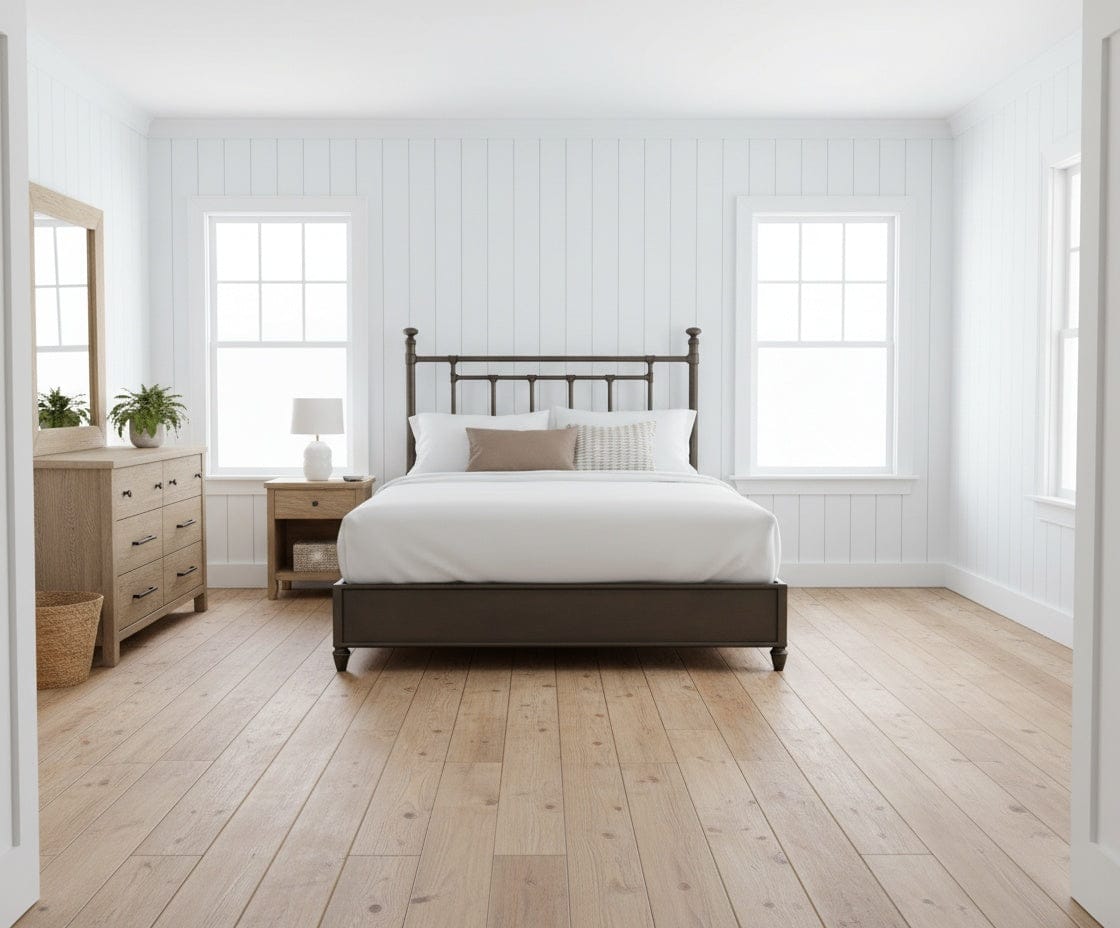
If you're choosing between an iron bed and a wood bed, the decision comes down to what matters most to you: longevity, maintenance, style flexibility, or budget. Both materials have been used for centuries, and both can produce beautiful, functional bedroom furniture. But they age differently, require different care, and perform differently over time.
We've been building iron beds since 1999, so we'll be transparent about our bias. We'll also be transparent about where wood has genuine advantages. This is an honest comparison designed to help you choose the material that fits your bedroom, your lifestyle, and your expectations for how long a bed should last.
Durability: How Long Each Material Lasts
Iron. A well-built iron bed with thick-walled steel tubing, structural castings, and one-piece welded construction will last 50 to 100+ years. The original iron beds from the 1880s are still in use today, 140 years later. Welded steel doesn't loosen, warp, crack, or split. It doesn't expand and contract with humidity. The structural joints don't degrade over time.
Wood. A quality hardwood bed frame (oak, maple, walnut, cherry) can last 30 to 50+ years with proper care, there are antique wood beds still in use after a century. However, that longevity requires periodic maintenance: re-tightening joints as wood expands and contracts with humidity, occasional refinishing, and protection from moisture and pests. Mid-grade wood furniture with inferior joinery lasts closer to 15 to 25 years. Particleboard, MDF, and veneered wood frames last significantly less: 5 to 10 years in most cases.
Edge: Iron. Both materials can last generations when built well. The difference is that iron gets there with zero maintenance while wood requires ongoing care to reach its full lifespan. A neglected iron bed still stands. A neglected wood bed loosens, warps, and degrades. For more on what separates a quality iron bed from a cheap one, see our handcrafted vs machine-made comparison.
Maintenance: What Each Material Requires
Iron. Minimal. Dust regularly with a soft cloth. Wipe spills promptly. Avoid prolonged direct sunlight, which can fade finishes over time. That's it. Iron beds don't need polishing, oiling, waxing, tightening, or refinishing under normal use. The finish is the only thing that can show wear, and hand-applied finishes are sealed and designed for decades of indoor use.
Wood. Moderate. Wood beds need periodic tightening of bolts and screws as joints loosen from seasonal expansion and contraction. Some finishes require oiling or waxing annually. Scratches and dents are more visible on wood and may require sanding and refinishing. Water damage, including humidity, can warp or stain wood permanently.
Edge: Iron. Iron beds are essentially zero-maintenance furniture. Wood beds require ongoing attention to stay tight and looking their best.
Style Versatility: Which Fits More Bedrooms?
Iron. Iron beds span an exceptionally wide style range because finish does the heavy lifting. The same bed frame in matte black reads as industrial. In antique bronze, it reads as traditional. In distressed white, it reads as coastal. In distressed turquoise, it reads as eclectic. One silhouette, dozens of identities. Iron also offers a visual lightness that wood can't match, especially with metal headboards, you can see through and around the frame, which opens up small rooms and keeps bedrooms from feeling heavy.
For a look at the full range of available finishes, see our finish options guide.
Wood. Wood beds excel in warm, natural aesthetics. A solid walnut bed brings organic texture and grain that metal can't replicate. Wood pairs naturally with other wood furniture (nightstands, dressers) and feels inherently cozy. In rustic, Scandinavian, mid-century modern, and Japanese-inspired bedrooms, wood is often the more natural choice.
Edge: Depends on your style. Iron wins on range and adaptability. Wood wins on natural warmth and organic texture. Neither is universally better. This one comes down to what your bedroom needs.
Weight Capacity and Structural Strength
Iron. Welded steel frames with thick-walled tubing handle heavy loads without flex. There are no joints to loosen, no wood grain to split, and no glue to fail. Iron beds support heavy mattresses (including thick memory foam and hybrid models) without sagging or structural compromise over time.
Wood. Solid hardwood is strong, but wood bed frames rely on bolted or doweled joints that are inherently weaker than welded metal. Under sustained heavy loads, wood joints can loosen, crack, or split, especially at the connection points between the headboard, rails, and footboard. Slat systems can also sag or break under excess weight.
Edge: Iron. Welded steel is structurally superior to bolted wood in long-term load bearing. This matters especially for heavier sleepers, active households, or beds that serve dual purposes (guest room daybed, kids' bed used for jumping).
Noise and Movement
Iron. A properly built iron bed with a frame from the same workshop is silent. No creaking, no squeaking, no shifting. The beds that squeak are either cheap imports with thin tubing and bolt-on castings, or antiques with mismatched replacement frames. If you're buying from a company that builds the frame alongside the bed, noise is a non-issue.
Wood. Wood beds can develop creaking over time as joints loosen from humidity cycling and normal use. Periodic tightening reduces this, but it's an ongoing maintenance task. Some wood-on-wood friction at rail-to-headboard connections is difficult to eliminate entirely.
Edge: Iron (when properly built). Both materials can be quiet when new. Iron maintains that silence indefinitely. Wood tends to develop noise over years of use.
Price Range: What Each Material Costs
Iron. Handcrafted American-made iron beds range from $800 to $4,000+ depending on size, collection, and customization. Budget imported iron beds start around $150 to $800 but use inferior materials and construction (thin tubing, bolt-on castings, machine-sprayed finishes).
Wood. Solid hardwood beds range from $500 to $3,000+ for quality craftsmanship. Veneered and engineered wood frames start around $200 to $800. High-end designer wood beds can exceed $5,000.
Edge: Comparable at quality tiers. When comparing like-for-like quality (American-made hardwood vs American-made iron), the price ranges overlap significantly. Iron tends to offer better cost-per-year value because of its longer lifespan and lower maintenance requirements.
Side-by-Side Comparison
| Factor | Iron Bed | Wood Bed |
|---|---|---|
| Lifespan | 50-100+ years | 30-50+ years (solid hardwood, with maintenance) |
| Maintenance | Dust only, near-zero upkeep | Periodic tightening, oiling, refinishing |
| Style Range | Extremely wide (finish-driven) | Strongest in natural/warm aesthetics |
| Weight Capacity | Excellent (welded joints, no flex) | Good (bolted joints, may loosen) |
| Noise Over Time | Silent when properly built | May develop creaking as joints loosen |
| Pest Resistance | Immune to termites and wood borers | Vulnerable to termites, wood borers |
| Humidity Resistance | Unaffected | Expands, contracts, can warp |
| Visual Weight | Light and open (see-through design) | Solid and substantial |
| Warmth / Texture | Finish-dependent (patinas add warmth) | Natural grain provides inherent warmth |
| Price Range (Quality) | $800-$4,000+ | $500-$3,000+ |
| Warranty (Typical) | Lifetime structural | 5-15 years |
When to Choose Iron
Choose iron if you want a bed that will last a lifetime with zero maintenance, if you value style versatility across finishes and aesthetics, if you live in a humid climate where wood expansion is a concern, or if you want visual lightness that opens up your bedroom space.
When to Choose Wood
Choose wood if you're drawn to natural grain and organic warmth that metal can't replicate, if your bedroom is designed around a specific wood species or mid-century aesthetic, or if you prefer the visual solidity of a platform or panel bed design. High-quality solid hardwood is a beautiful material, and a well-made wood bed can be a centerpiece in the right room.
Why Not Both?
Some of our most interesting bedroom designs combine iron beds with wood furniture: an antique bronze iron bed flanked by solid walnut nightstands, or a matte black iron frame against a reclaimed wood accent wall. The contrast between materials creates visual interest that neither one achieves alone.
For a full walkthrough of iron bed types, sizing, and what to look for, read our iron bed buyer's guide, or browse our iron beds to see what handcrafted construction looks like in every style.
Frequently Asked Questions
Are iron beds more durable than wood beds?
Yes. A well-built iron bed with thick-walled steel and structural castings lasts 50 to 100+ years with zero maintenance. Solid hardwood beds can last 30 to 50+ years but require periodic joint tightening and refinishing to reach their full lifespan. The welded joints on a quality iron bed don't loosen, warp, or degrade the way wood joints do over time.
Do iron beds feel cold in winter?
The metal itself is room temperature within minutes of contact. In practice, iron beds don't feel cold because you're sleeping on a mattress, not the frame. Bedding, pillows, and mattress padding insulate you completely from the metal surface.
Are iron beds heavier than wood beds?
Iron beds are generally heavier than comparably sized wood beds, which contributes to their stability. The weight comes from thick-walled steel tubing and hand-poured castings. Once placed, the weight is an advantage: the bed doesn't shift, slide, or move on the floor.
Can I mix iron beds with wood bedroom furniture?
Absolutely. Iron beds pair beautifully with wood nightstands, dressers, and armoires. The contrast between metal and wood creates visual depth and keeps the room from feeling one-dimensional. Warm finishes like antique bronze complement most wood tones especially well.
Which is better for allergies: iron or wood?
Iron. Metal frames are immune to termites, wood borers, and other pests that can damage wood frames over time. Metal is also easier to clean thoroughly since there are no porous surfaces for dust or allergens to accumulate in.
Ready to Compare in Person?
Our manufacturing partners have handcrafted iron beds in Los Angeles since 1999. Every bed is made to order, finished by hand, and backed by a lifetime structural warranty. If you're weighing iron against wood, we're happy to walk you through the details.
Explore our Iron Art beds, or call us at (800) 378-1742 to talk through your options.
Frequently Asked Questions
Ready to Find Your Perfect Iron Bed?
Browse our collection of handcrafted iron beds, each built to last a lifetime in Los Angeles by our manufacturing partners.
Iron Art bedsAmerican Iron Beds
Handcrafting Iron Beds in Los Angeles Since 1999
Founded in 1999, our iron beds are handcrafted in Los Angeles by our manufacturing partners using construction methods proven since the late 1800s, thick-walled steel tubing, solid iron rod, and hand-poured metal castings. Every bed comes with a lifetime structural warranty.
Continue Reading
 Iron Beds & Frames
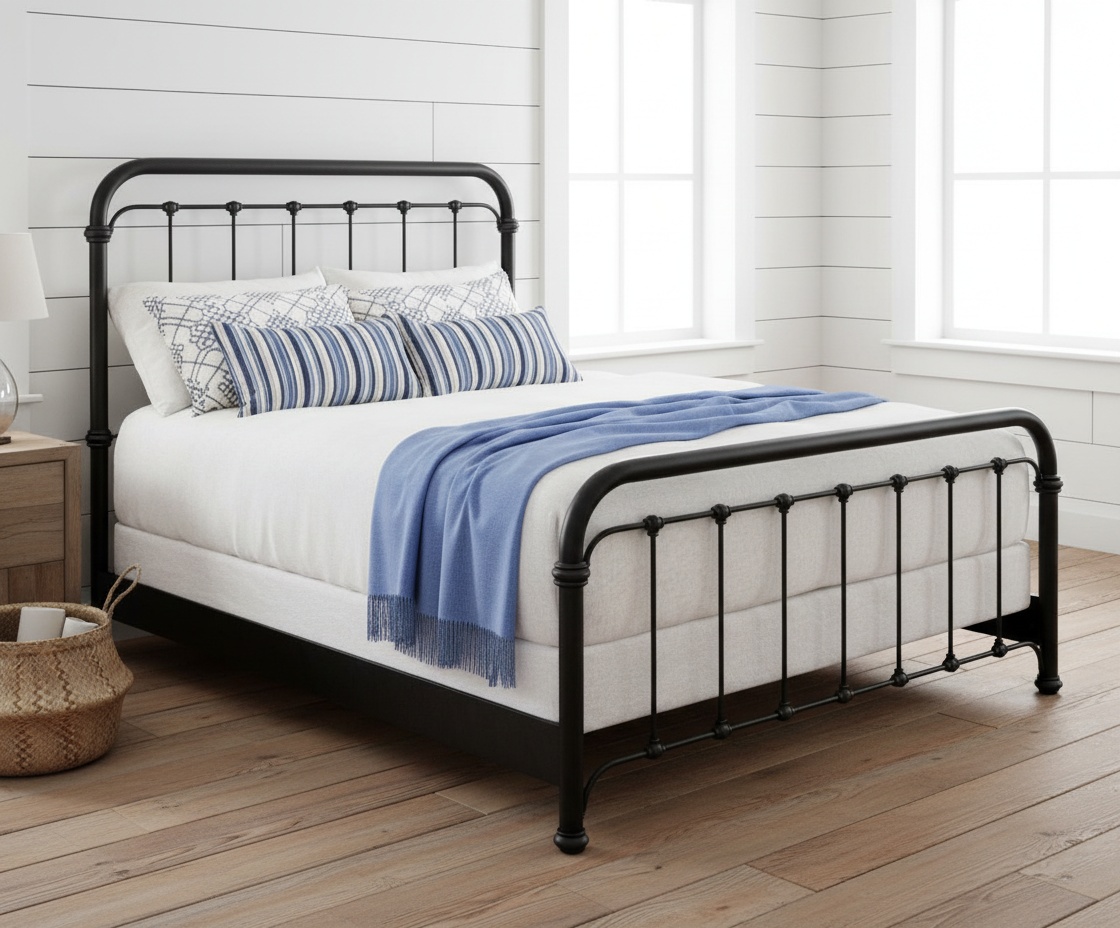
Iron Beds: The Complete Buyer's Guide for 2026
Everything you need to know before buying an iron bed frame: types, styles, sizes, construction quality, and care. A comprehensive buyer's guide from a manufacturer with 27+ years of experience.
 Iron Beds & Frames
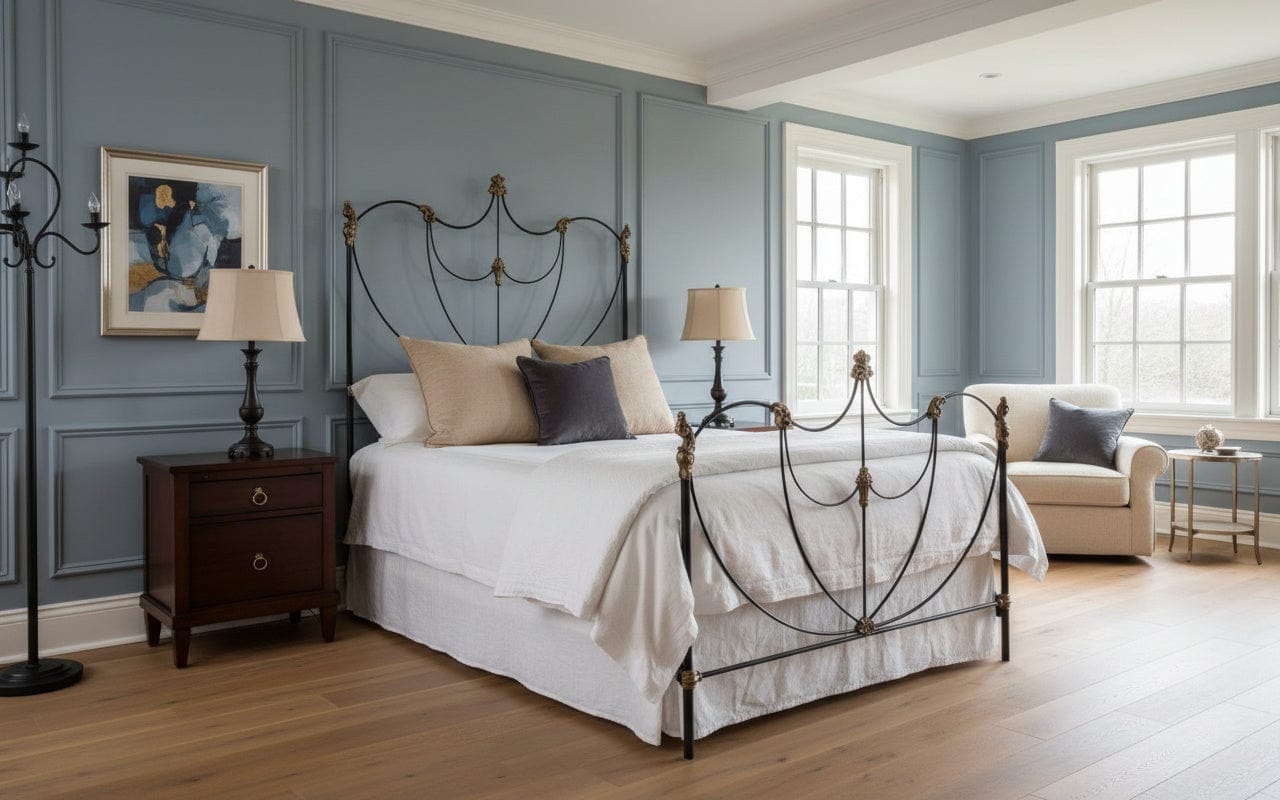
Custom Iron Bed Finishes: Your Guide to Colors, Patinas & Coatings
Explore hand-applied iron bed finishes from matte black to antique bronze, farmhouse red, and custom patinas. A complete guide to every finish option for your handcrafted iron bed.
 Iron Beds & Frames
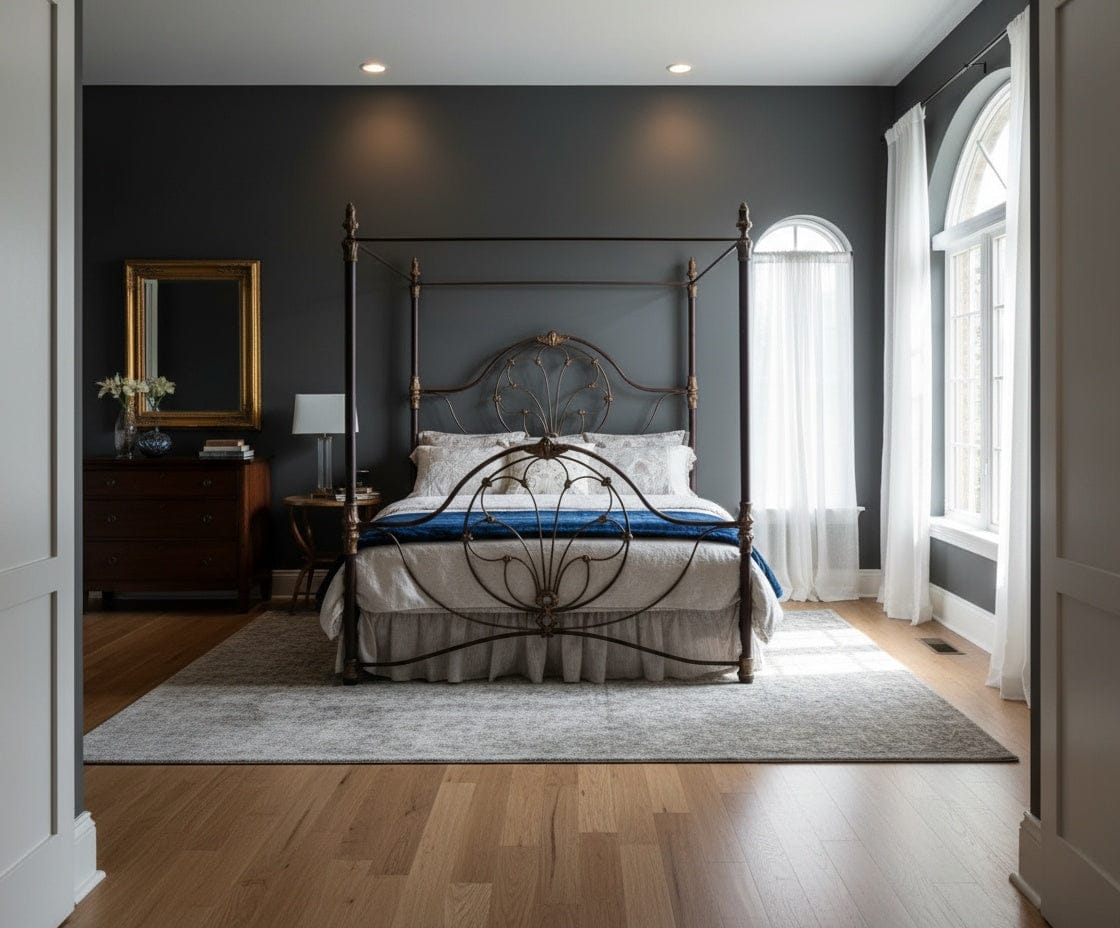
Built Like an 1800s Original: The History and Construction of Iron Beds
Explore the history of iron beds from the 1800s to today. Learn how original construction methods, steel tubing, iron rod, and hand-poured castings, survive in modern handcrafted iron bed frames.