Wrought Iron vs Cast Iron Beds: What's the Difference?
By the American Iron Beds team
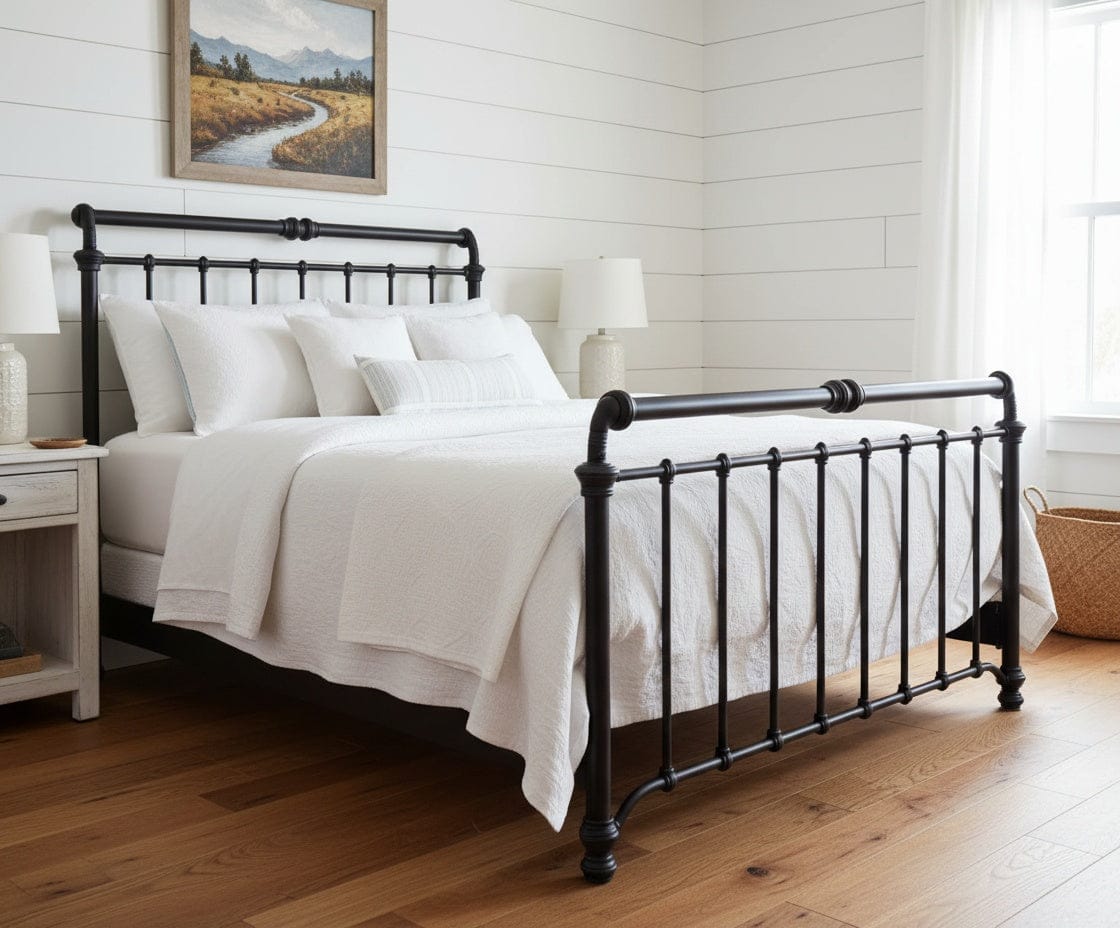
Wrought iron is nearly pure iron that is heated and worked into shape, so it bends under force instead of breaking. Cast iron is high-carbon iron that is melted and poured into a mold, so it captures fine detail and handles compression well but can crack under a sharp blow. Antique iron beds used each where it worked best, and a well-made modern iron bed follows the same logic: steel tubing and solid rod for the structure, poured castings at the joints for strength and ornament.
That matters more than the label on a listing. True wrought iron is no longer made commercially, so almost every "wrought iron bed" sold today, ours included, uses steel. The useful question is how the bed is put together. Here is what each term means, how both show up in a modern bed, and what to check before you buy.
Wrought iron: shaped by working the metal
"Wrought" is the old past tense of "work." Wrought iron was heated, then hammered, bent and twisted into shape, traditionally by a blacksmith.
- Composition: almost pure iron with very little carbon, plus threads of slag that give it a fibrous, wood-like grain.
- Behavior: malleable and tough. Under heavy force it bends rather than snaps, which made it ideal for scrolls, curves, gates and railings.
- Availability today: true wrought iron has not been produced at commercial scale for decades. In furniture, "wrought iron" now describes the worked-metal look and tradition, not the historical material.
Cast iron: shaped by a mold
Cast iron is melted and poured into a mold, and it takes the shape of that mold.
- Composition: roughly 2 to 4 percent carbon, far more than wrought iron. The carbon makes it hard and rigid.
- Behavior: strong under compression, weak under tension. It cannot be bent once it has cooled, and a hard impact can crack it instead of denting it.
- Strength in design: a mold can reproduce rosettes, finials, collars and scroll detail that would be slow or impossible to hammer by hand. That is why cast detail defines the ornate antique look.
Look closely at an ornate iron headboard and you can usually see both methods at work: the long curves and scrolls were bent, and the collars, rosettes and finials where pieces meet were cast.

Side-by-side comparison
| Factor | Wrought iron (historical) | Cast iron (historical) | Modern iron bed (steel + poured castings) |
|---|---|---|---|
| How it is shaped | Heated and worked by hand | Melted and poured into a mold | Tubing and rod cut, bent and welded; castings poured around the joints |
| Carbon content | Very low | About 2 to 4 percent | Varies by component |
| Under a sharp impact | Bends | Can crack | Steel structure bends rather than shatters |
| Best at | Curves, scrolls, long members | Fine ornamental detail, compression | Both, each in its place |
| Available today | Essentially no | Yes | Yes |
| Role in a bed | Frame, rails, scrollwork | Knobs, finials, joint castings | Structure plus reinforced, decorative joints |
How a modern iron bed uses both
Every bed we offer is handcrafted to order in Los Angeles by our partner workshops, and the construction mirrors the old wrought-and-cast pairing with modern materials:
- Thick-walled steel tubing forms the frame structure. Steel takes the place of wrought iron: it is tough, consistent and bends rather than shatters.
- Solid iron rod is used for spindles and decorative bars.
- Headboards and footboards are each welded as one piece, so there are no internal fasteners to work loose.
- Hand-poured castings sit at the weld joints, where cast iron always did its best work.
- Bolt-on side rails connect the headboard and footboard with only very simple tools.
The result is the look of a 19th century iron bed with a structure built for daily use in a standard US mattress size. Complete beds weigh roughly 100 to 250 pounds depending on the design, and the designs with the most cast and rod detail sit toward the heavier end.
What a poured casting actually does
On our beds a casting is not a separate ornament. Molten metal is poured around each weld joint, so the decorative collar and the reinforcement are the same piece of metal, flowing into the joint rather than sitting on top of it. Once it has cooled, each casting is filed by hand, and the finish is applied by hand afterward, which is why two beds of the same design show small, natural differences in detail, color and patina.

An ornament that is fastened on after the frame is built can look similar from across the room, but it does none of that structural work. That is the single most useful thing to ask about when you compare iron beds with cast detail.
What to check when you shop
Since nearly everything on the market is steel, use these questions instead of the material label:
- Are the castings poured around the joints or attached afterward? A poured casting is part of the joint. A decorative piece fastened on later is ornament only. Ask the seller directly.
- Is the headboard welded as one piece? A one-piece headboard has nothing inside it to loosen over the years.
- Are the spindles solid rod? Solid rod feels and sounds different from thin hollow tube.
- What does the bed weigh? Weight alone does not prove quality, but it tells you what delivery and setup will involve.
- Is the finish applied by hand? Hand-applied finishes show natural variation in color and patina.
- Who stands behind it? Our beds carry a lifetime warranty covering the bed under normal use. It does not cover damage from accidents or impacts, such as hitting the bed while moving it.
For a deeper look at these quality markers, see our guide to what makes a quality iron bed.
Choosing between ornate cast detail and cleaner lines
If the cast look is what drew you to iron beds, start with our Dream Gallery collection, which holds our most ornate designs, including every canopy bed. The Chartres, Isabelle and Morella Canopy show how much detail poured castings allow. For the ornate style in depth, see our Victorian iron beds guide.

If you prefer a simpler profile, the Sheffield shown at the top of this page and the Castine keep the castings to the joints and let the lines do the work. You can browse all of our iron beds by style and size.

Lead times differ by collection; our collection comparison lays them out, and Quickship beds are in stock and ship in about a week.
Where to go next
For the bigger picture on styles, sizing and finishes, read our wrought iron beds guide. If you are shopping specifically for cast detail, our guide to cast iron bed frames covers how to choose one, and antique iron beds vs reproductions covers what to inspect on an old cast iron bed. Questions about construction? Call us at (800) 378-1742, Monday to Friday, 9am to 5pm ET.
Frequently Asked Questions
Is wrought iron stronger than cast iron?
Is a modern wrought iron bed actually made of wrought iron?
Can I tell if an old bed is wrought iron or cast iron?
Do cast iron beds break?
How can I tell a poured casting from an attached one?
Ready to Find Your Perfect Iron Bed?
Browse our iron beds, each handcrafted to order in Los Angeles by our partner workshops.
ornate Dream Gallery iron bedsAmerican Iron Beds, since 1999
Every bed is handcrafted to order in Los Angeles by our partner workshops, with thick-walled steel tubing, solid iron rod and hand-poured castings, and backed by a lifetime warranty. Questions? Call (800) 378-1742, Mon to Fri, 9am to 5pm ET.
Continue Reading
 Wrought Iron Beds
Wrought Iron Beds (and Rod Iron Beds): A Buyer's Guide
Rod iron and wrought iron beds are the same thing. Here is how modern wrought iron beds are built from steel tubing, solid iron rod and poured castings, plus the styles, sizes, finishes and lead times to know before you order.
 Iron Beds & Frames
Cast Iron Bed Frames: What to Know Before You Buy
A modern cast iron bed frame is a steel bed with castings poured around the joints. Here is how one is built, the risks of antique cast iron frames, and a step-by-step way to choose size, configuration, finish and timing.
 Iron Beds & Frames
Quality Iron Beds: How to Judge the Best Metal Bed Frame
How to judge a quality iron bed: the seven markers to check, what "hand-forged" really means, and a seller comparison checklist with our own answers.