Wrought Iron Beds: Styles, Strength & How to Choose the Right One
By American Iron Beds · Handcrafting Iron Beds in Los Angeles Since 1999
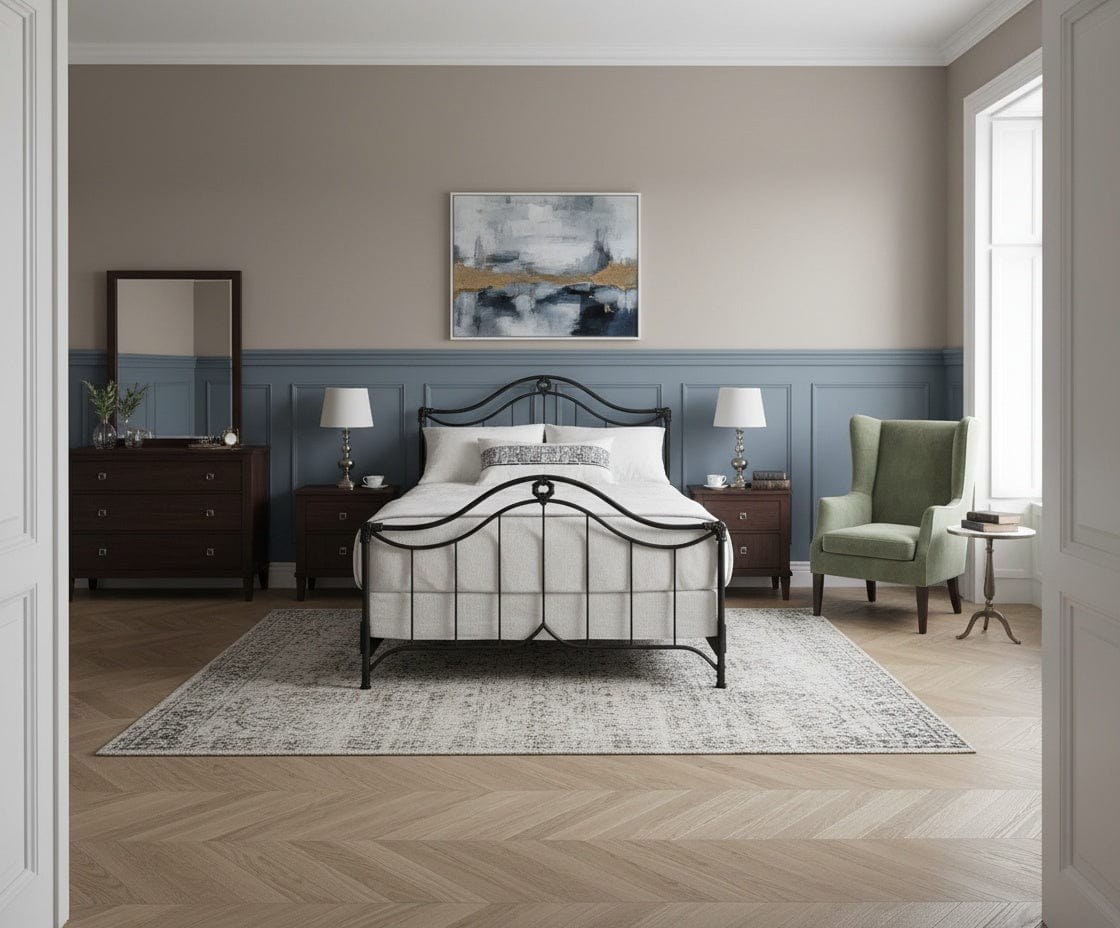
What's In This Guide
Wrought iron beds have been a staple of American bedrooms since the late 1800s. A wrought iron bed was originally valued for its durability, its resistance to the bedbugs and pests that plagued wood beds, and its ability to be shaped into intricate designs that showed off a household's taste and means. More than a century later, the appeal hasn't changed much. Wrought iron beds are still chosen for their longevity, their visual range, and the quality of craftsmanship they represent. For a closer look at the iron bedstead tradition and why the design has never gone out of production, see our dedicated guide.
This is the complete guide to wrought iron beds. We'll cover what the term actually means, how these beds are built, the major style categories, how to choose the right size and configuration, and what to look for when comparing quality. Our manufacturing partners have handcrafted iron beds in Los Angeles since 1999, so we'll share what we've learned along the way.
What "Wrought Iron" Actually Means
The term "wrought iron" is used loosely in the furniture industry, and it's worth clarifying what it means in practice.
Historically, wrought iron referred to a specific type of iron that was heated and hammered (wrought) into shape by a blacksmith. True wrought iron has a fibrous, grainy structure and is highly resistant to corrosion. It was the standard material for iron beds, gates, railings, and architectural metalwork throughout the 1800s.
Today, true wrought iron is rarely produced. Modern iron beds, including ours, are built from steel — specifically thick-walled steel tubing, solid iron rod, and hand-poured metal castings. Steel has higher tensile strength than historical wrought iron, is more consistent, and is more versatile. The construction methods mirror the originals: hand-shaped metal, structural castings at joints, and one-piece welded headboards and footboards.
When people search for "wrought iron beds," they're looking for the aesthetic and the quality level — ornate metalwork, hand-applied finishes, structural durability — rather than a specific metallurgical composition. That's what we build. If you have been searching for "rod iron beds," you are looking for the same thing — see our guide on rod iron beds explained for the full terminology breakdown. For a detailed breakdown of wrought iron vs cast iron and how each material is used in bed construction, see our comparison guide.
For a deeper look at the history of iron bed construction from the 1800s to today, read our post on the history and construction of iron beds.
How Wrought Iron Beds Are Built
Understanding construction is the key to understanding quality. Not all iron beds are created equal, and the differences are dramatic.
Thick-walled steel tubing. The structural backbone of every bed. We use heavy-gauge, thick-walled tubing that exceeds what you'll find on most imported beds. Cheap imports use thin-walled tubing that flexes and bends. You can feel the difference immediately: a quality iron bed feels solid and immovable. A cheap one wobbles.
Solid iron rod. Used for decorative scrollwork, spindles, and structural accents. Solid rod doesn't flex or rattle. Imported beds often substitute hollow rod or thin wire, which creates noise and reduces durability.
Hand-poured castings. Molten metal poured into molds at every structural joint. Our castings are structural, not just decorative. They cover the weld points while adding beauty to the design. Each casting reinforces the joint it surrounds. Imported beds often use glued-on or screwed-on castings that loosen over time.
One-piece welded construction. Each headboard is one solid welded piece. Each footboard is one solid welded piece. There are no bolts, screws, or fasteners holding the headboard together. This is why our beds don't squeak: there are no joints to work loose.
Matched frames. Our frames are built in the same Los Angeles workshop as the beds, ensuring a precise fit between headboard, footboard, and frame. Mismatched frames — where the bed is from one manufacturer and the frame is from another — are the number one cause of wobble and noise in iron beds.
For a detailed comparison of handcrafted vs imported construction, see our post on hand-forged vs machine-made iron beds.
Wrought Iron Bed Styles
One of the reasons wrought iron beds have endured for over a century is their extraordinary style range. The same material and construction methods can produce beds that look completely different depending on the design and finish.
Victorian and Traditional. Ornate scrollwork, detailed castings, and decorative flourishes. Victorian iron beds are the most visually rich, with curves, spirals, and botanical motifs that reward close inspection. Finishes like Antique Bronze with its green verdigris patina, or Aged Bronze with its deep, dark warmth, complement the ornate detailing. These beds anchor traditional, romantic, and period-inspired bedrooms.
Farmhouse and Cottage. Simpler silhouettes with a focus on charm and warmth rather than ornamental complexity. Farmhouse iron beds often feature clean lines, gentle curves, and spindle details. Distressed White is the defining finish for this style — bright white with dark base metal showing through — but Farmhouse Beige with its raw, weathered patina and Rustic Ivory with its soft cream texture are equally at home. These beds work in country homes, coastal bedrooms, and rooms with reclaimed wood furniture and linen textiles.
Industrial and Modern. Clean geometric lines, minimal ornamentation, and strong structural presence. Industrial iron beds lean toward Matte Black (flat, uniform, and bold), Aged Iron (dark charcoal-gunmetal with subtle variation), or Aged Steel (warm dark pewter with bronze flecks). These beds pair naturally with exposed brick, concrete, raw wood, and metal accent furniture.
Eclectic and Bohemian. Iron beds in bold, unexpected finishes that become the room's centerpiece. Farmhouse Red (deep, muted barn red with dark undertones), Distressed Turquoise (vibrant and chippy), Antique Blue (dark and moody with a blue-teal cast), or Antique Sage (heavily distressed mint-sage green). These finishes turn the bed into a statement piece and work in rooms that embrace color, pattern, and collected-over-time character.
Canopy and Four-Poster. Dramatic vertical presence. Wrought iron canopy beds add height and architectural interest to a bedroom. They work with or without drapes and are available in both ornate and minimalist designs. We carry canopy beds including the Morella, Chartres, Isabelle, and Amiens Abbey canopies.
For modern wrought iron bed ideas across all these styles — with finish pairings and room styling tips for every aesthetic — see our dedicated styling guide.
Choosing the Right Size
All of our wrought iron beds are available in standard U.S. mattress sizes:
Twin (39" W x 75" L) — Best for children's rooms, guest rooms, and smaller spaces. A wrought iron twin bed with a headboard-only configuration can also serve as a daybed alternative.
Full (54" W x 75" L) — A good choice for single sleepers who want more room, or for guest bedrooms. Full-size iron beds have a classic proportion that works especially well in vintage and cottage settings. Extra-long Full (54" x 80") is available for an additional $75.
Queen (60" W x 80" L) — Our most popular size. Queen wrought iron beds fit comfortably in most master bedrooms and provide enough space for two sleepers.
Eastern King (76" W x 80" L) — The wider king option. Also called Standard King. A wrought iron king size bed in Eastern King is best for spacious master bedrooms where you want maximum sleeping width.
California King (72" W x 84" L) — The longer king option. Four inches narrower than Eastern King but four inches longer. Best for taller sleepers or long, narrow bedrooms. Always confirm which king size you need when ordering — this is the most common ordering mistake in the industry.
Extra-Long Twin (39" x 80") is also available for $75 additional.
Configurations: Headboard, Frame, or Complete Bed
Every wrought iron bed comes in three configurations, and the one you choose affects stability, appearance, and cost.
Headboard Only. Includes the wrought iron headboard and mounting hardware. Pre-drilled with 15 holes to attach to most standard bed frames. This is the most affordable option, but we want to be upfront: if you attach our headboard to a mattress-store frame that wasn't built in the same workshop, there may be some wobble. The fit won't be as precise as a matched system. For a deeper dive into headboard styles, sizing, mounting options, and the trade-offs between configurations, see our metal headboards buyer's guide.
Headboard + Frame. Includes the headboard plus a sturdy mattress frame (no footboard). The frame comes in matte black or gunmetal grey depending on the collection. A good middle ground for customers who want the iron bed look and a stable foundation without the footboard.
Complete Bed. Headboard, footboard, and full frame system. This is our most popular option by a wide margin — roughly 85% of our orders. The complete bed provides the most stability, the most visual impact, and the classic iron bed look that drew most customers to us in the first place.
Rail height options. Depending on the collection, rail heights come in 8" (designed for box spring and mattress), 9" (standard on some collections, customizable), or 12" platform height (designed for mattress only, no box spring needed). Custom rail height adjustments are available on select collections for a $165 upcharge.
What to Look for When Comparing Quality
Not all wrought iron beds are built the same. When you're comparing options from different companies, here's what separates quality construction from budget imports.
Wall thickness of the tubing. Thicker walls mean more strength and durability. Hold the bed frame and try to flex it. A quality iron bed won't budge. A budget bed will give.
Casting construction. Are the castings structural (hand-poured around weld joints) or decorative (glued or screwed on after assembly)? Structural castings reinforce every joint. Decorative castings are cosmetic only and will loosen or fall off over time.
One-piece welded headboard and footboard. Quality beds have no bolts or screws holding the headboard together. The entire piece is welded as a unit. If you see bolt heads or screw holes in the headboard itself, that's a sign of budget construction.
Frame origin. Is the frame built by the same maker as the bed? Matched frames fit precisely and eliminate wobble. Mismatched frames are the leading cause of instability in iron beds.
Finish application. Hand-applied finishes have visible depth, variation, and texture. Machine-sprayed finishes are flat, uniform, and lack character. See our complete guide to iron bed finishes for details on every finish option.
Warranty. A lifetime structural warranty means the manufacturer stands behind the construction. Limited warranties (3-5 years) are common on imported beds and reflect the expected lifespan of the product.
Hand-Applied Finishes for Wrought Iron Beds
The finish transforms the style of an iron bed. We offer a wide range of hand-applied finishes across our collections, and every one is applied by an artisan in Los Angeles by our manufacturing partners.
For traditional and Victorian styles: Antique Bronze (copper-bronze base with green verdigris patina), Aged Bronze (deep dark bronze with blue-green hints in the grooves), Brass Bisque (muted antique brass with green-gold complexity).
For farmhouse and cottage: Distressed White (white with dark base showing through), Farmhouse Beige (heavily weathered silvery-brown patina), Rustic Ivory (warm cream with mottled texture), Vintage White (dramatic two-tone with olive and sage-gold weathered patina over a white base).
For industrial and modern: Matte Black (flat, uniform, clean), Aged Iron (dark charcoal-gunmetal with subtle variation), Aged Steel (warm dark pewter with bronze and amber flecks).
For bold and eclectic: Farmhouse Red (deep muted barn red), Distressed Turquoise (vibrant and chippy), Antique Blue (very dark, nearly black with blue-teal cast), Antique Sage (heavily distressed mint-sage green).
Premium designer finishes: Black Gold and Smokey Gold carry an additional $300 charge for an enhanced hand-applied process that requires significantly more artisan time.
For complete descriptions of all of our hand-applied finishes, see our full finish guide.
Care and Maintenance
Wrought iron beds are among the lowest-maintenance pieces of furniture you can own. Here's what's involved:
Dust regularly. A soft cloth or feather duster is all you need. Avoid abrasive pads or harsh chemical cleaners.
Wipe spills promptly. A damp cloth followed by a dry one handles most spills. Don't let liquid sit on hand-applied patina finishes.
Avoid prolonged direct sunlight. Extended sun exposure can fade any finish over time. Curtains or bed positioning can help in sun-drenched rooms.
That's it. No tightening, no oiling, no refinishing. The welded construction means nothing loosens over time. The sealed finishes are designed for decades of indoor use.
For more detailed care instructions by finish type, see the care section in our finish guide. For the full breakdown — including rust prevention, scratch repair, and what products to avoid — see our complete iron bed care guide.
Frequently Asked Questions
Do wrought iron beds squeak?
Not when they're built properly. Squeaking comes from loose joints — either bolt-on castings working free, or mismatched frames that don't fit the headboard and footboard precisely. Our beds are one-piece welded construction with frames built in the same workshop, which eliminates the two most common causes of noise.
Are wrought iron beds actually made from wrought iron?
Modern iron beds, including ours, are made from steel: thick-walled steel tubing, solid iron rod, and hand-poured metal castings. Steel has higher tensile strength and is more consistent than historical wrought iron. The term "wrought iron" is used in the industry to describe the aesthetic and construction style, not the specific alloy.
How much does a wrought iron bed weigh?
Weight varies by design and size, but a complete queen-size iron bed with headboard, footboard, and frame typically weighs 80 to 150+ pounds depending on the design complexity. The weight is an advantage once the bed is placed: it doesn't shift, slide, or move on the floor.
Can I customize my wrought iron bed?
Yes, within select collections. Customization options include finish selection from our hand-applied options, rail height adjustments ($165 upcharge, maximum 12-13 inches), headboard and footboard height adjustments, and fully custom designs with a photo and dimensions. Custom orders have higher pricing and are non-refundable.
How long does it take to receive a wrought iron bed?
All beds are made to order. Production time is currently 6-8 weeks. After production, transit time is typically 1-3 weeks depending on your location. White Glove delivery (transport to room of choice, unpacking, and full assembly) is $299 flat on all orders.
Find Your Wrought Iron Bed
We've been building wrought iron beds in Los Angeles since 1999. Every bed is handcrafted to order, finished by an artisan, and backed by a lifetime structural warranty. Whether you're drawn to ornate Victorian designs, clean industrial lines, or something in between, we build it for you.
Browse our Iron Art collection for artistic wrought iron designs, or explore our American Classics for our widest range of customization options. Call us at (800) 378-1742 to talk through your options with someone who works with these beds every day.
Frequently Asked Questions
Ready to Find Your Perfect Iron Bed?
Browse our collection of handcrafted iron beds, each built to last a lifetime in Los Angeles by our manufacturing partners.
Iron Art collectionAmerican Iron Beds
Handcrafting Iron Beds in Los Angeles Since 1999
Founded in 1999, our iron beds are handcrafted in Los Angeles by our manufacturing partners using construction methods proven since the late 1800s — thick-walled steel tubing, solid iron rod, and hand-poured metal castings. Every bed comes with a lifetime structural warranty.
Continue Reading
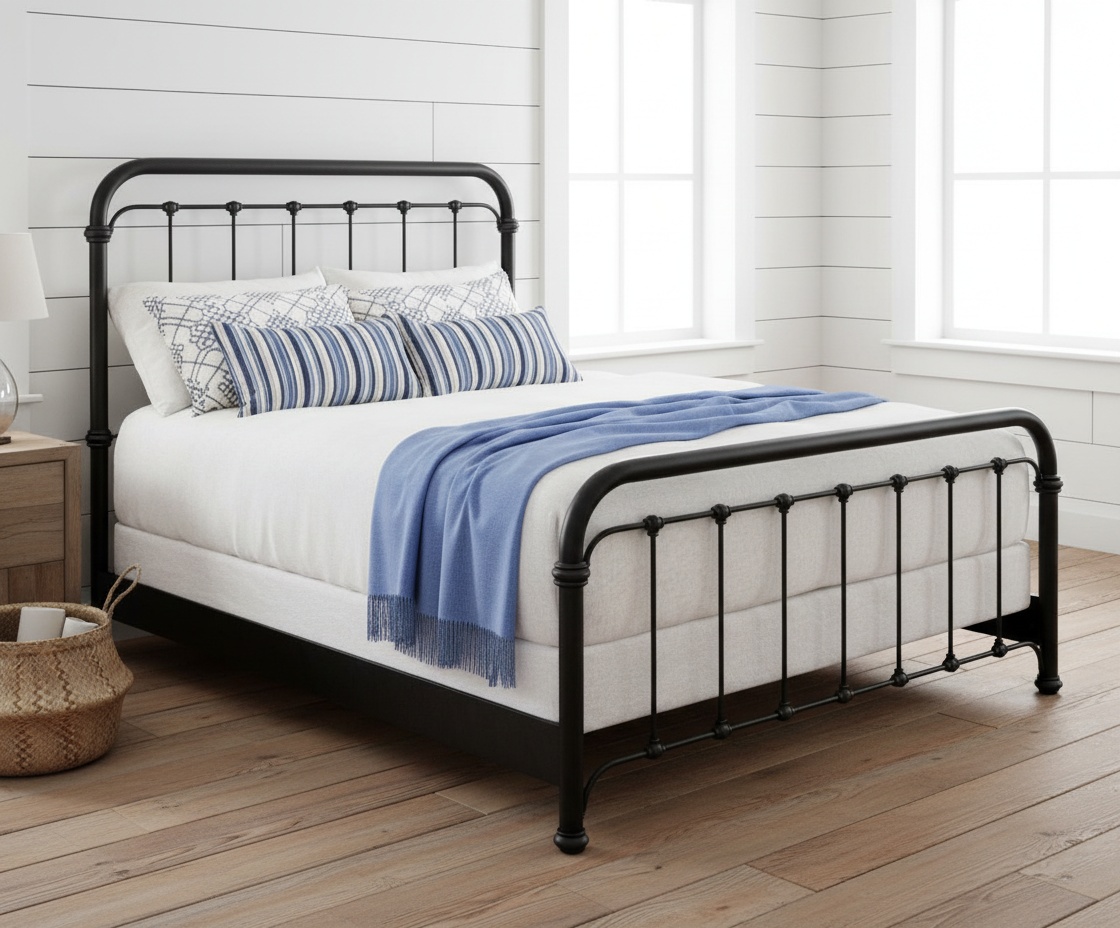 Iron Beds & Frames
Iron Beds: The Complete Buyer's Guide for 2026
Everything you need to know before buying an iron bed frame: types, styles, sizes, construction quality, and care. A comprehensive buyer's guide from a manufacturer with 27+ years of experience.
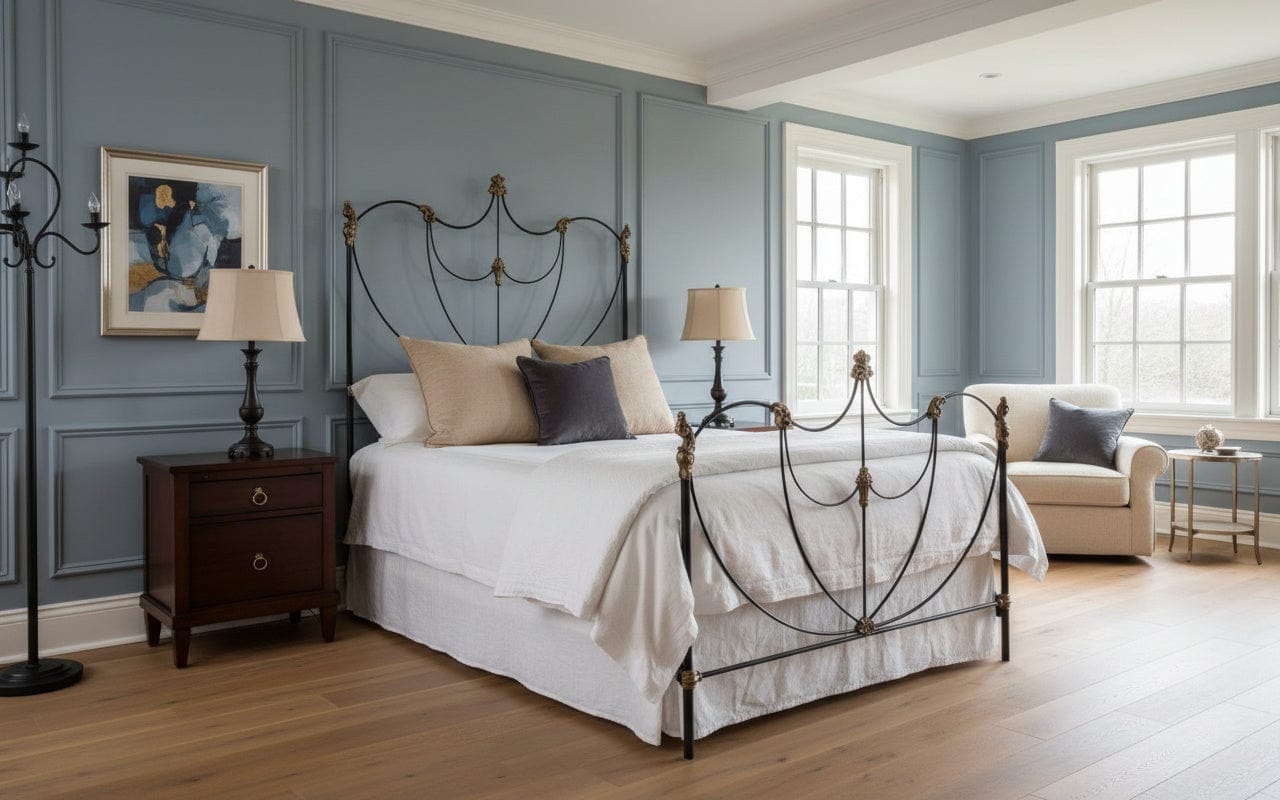 Iron Beds & Frames
Custom Iron Bed Finishes: Your Guide to Colors, Patinas & Coatings
Explore hand-applied iron bed finishes from matte black to antique bronze, farmhouse red, and custom patinas. A complete guide to every finish option for your handcrafted iron bed.
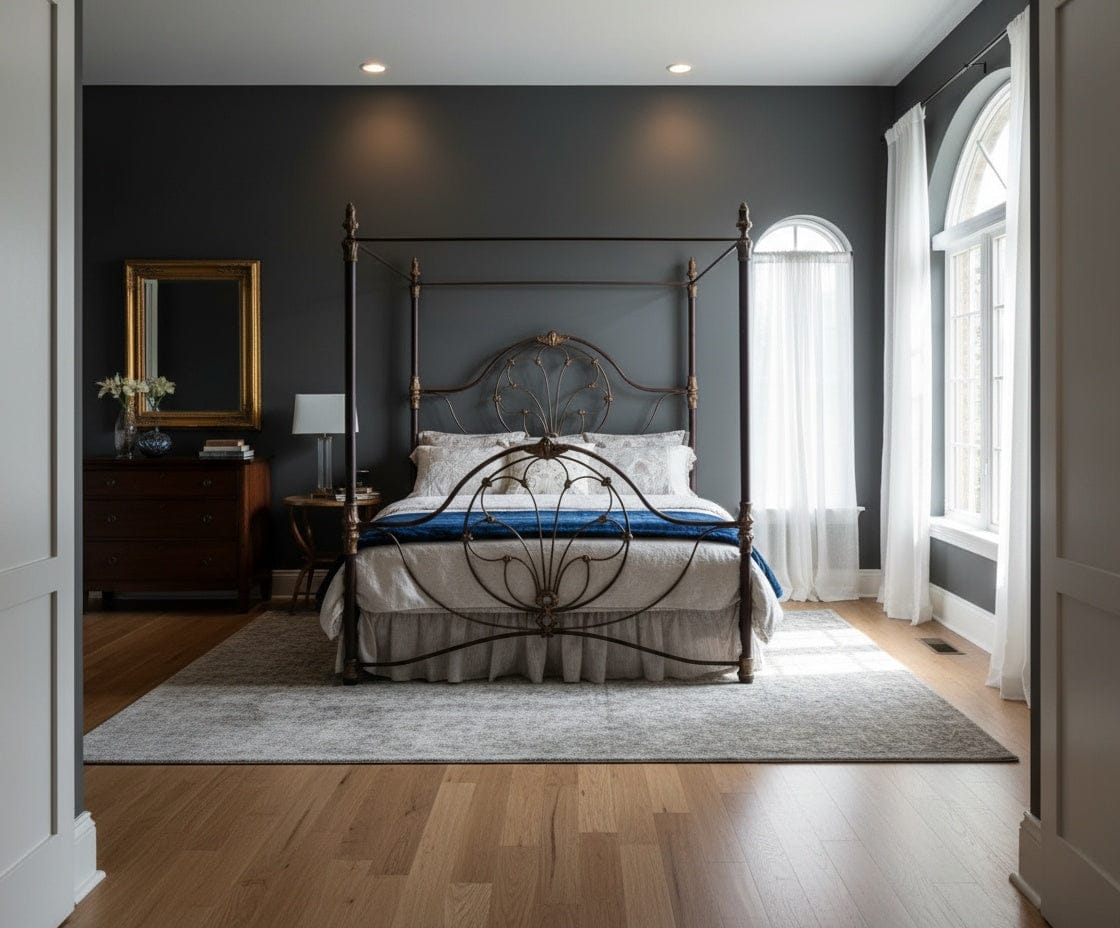 Iron Beds & Frames
Built Like an 1800s Original: The History and Construction of Iron Beds
Explore the history of iron beds from the 1800s to today. Learn how original construction methods — steel tubing, iron rod, and hand-poured castings — survive in modern handcrafted iron bed frames.