Iron Bedsteads: The Traditional Bed Frame That Never Went Out of Style
By American Iron Beds · Handcrafting Iron Beds in Los Angeles Since 1999
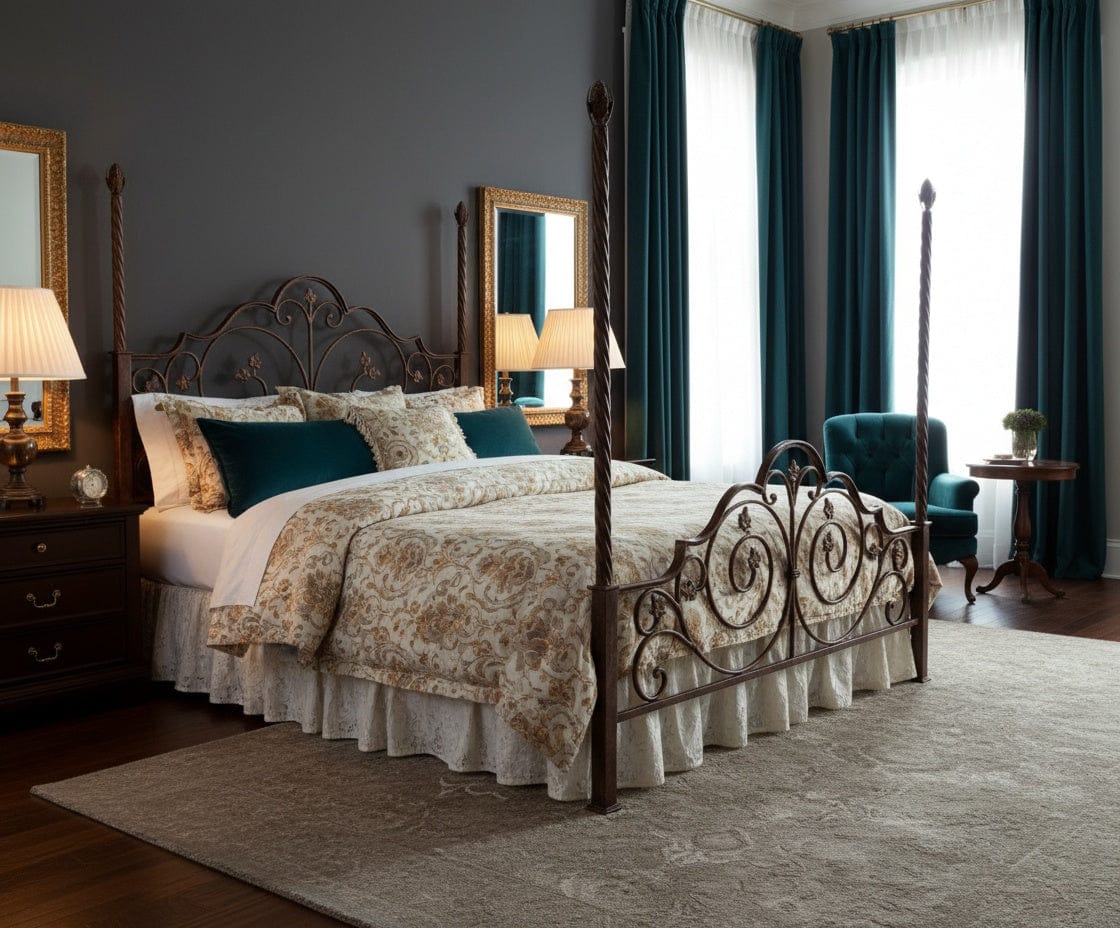
Walk into an antique shop, a restored farmhouse, or a boutique hotel, and you'll often find the same piece of furniture anchoring the bedroom: an iron bedstead. The style has been in continuous production since the 1840s, and unlike nearly every other furniture trend, it has never really gone away. Victorian homes had them. Mid-century hospitals used them. Modern farmhouses, coastal cottages, industrial lofts, and minimalist contemporary bedrooms all pull the same traditional iron bedstead into rooms that otherwise share nothing in common.
We've spent more than 27 years building iron beds by hand in our Los Angeles workshop. In that time, the design trends around our beds have cycled through at least three major revivals. The bedsteads themselves have barely changed. Here's why the traditional iron bedstead has outlasted almost every other bed frame design, and what to look for if you're considering one for your home.
What Is an Iron Bedstead?
A bedstead is the full structural frame of a bed. It includes the headboard, the footboard, and the side rails that connect them, designed to hold a mattress on top of slats, a box spring, or a platform insert. An iron bedstead is simply a bedstead built primarily from iron and steel rather than wood, plywood, or upholstered panels.
The word "bedstead" predates "bed frame" by roughly a century, and it still carries a specific connotation today. When people search for an iron bedstead, they're usually picturing a traditional, freestanding frame with a clearly defined head and foot, visible vertical spindles or decorative ironwork, and the kind of silhouette you'd find in a historic home. They're not looking for a modern platform bed or an upholstered frame with a metal base hidden inside.
That distinction matters when you shop. A lot of listings use "iron bed frame" and "iron bedstead" interchangeably, but the traditional bedstead style has specific design elements that separate it from other metal beds. For a deeper look at how these frames are constructed and where the design came from, see our guide to the history and construction of iron beds.
A Short History of the Iron Bedstead
Iron bedsteads first appeared in meaningful volume in the 1840s in England and the United States. They were marketed as a hygienic alternative to wooden bedsteads, which were notorious for harboring bedbugs and other pests in the joints and seams of the wood. Iron, by contrast, had no crevices for pests to settle into and could be wiped clean with a damp cloth. For Victorian-era households obsessed with sanitation, the appeal was immediate.
By the 1880s, iron bedsteads were standard in homes, hospitals, schools, orphanages, and hotels across both countries. Mass production made them affordable enough that even working-class households could own one, and the design proved so structurally sound that a significant number of those original 19th-century beds are still in use today. It's not unusual for us to hear from customers who are replacing a great-grandparent's iron bedstead only because the mattress sizes have changed, not because the frame has failed.
The style went through a brief dip in popularity in the mid-20th century, when wooden and upholstered beds took over the mainstream market. But the revival started in the 1980s, driven by the country and farmhouse aesthetic movements, and has continued steadily since. Today, iron bedsteads are as common in high-end boutique hotels and designer bedrooms as they were in Victorian row houses. The design has proven, over almost 200 years, that it doesn't age out.
How a Traditional Iron Bedstead Is Built
A genuine iron bedstead is not a single piece of iron. It's an assembly of several distinct components, each chosen for a specific structural or decorative purpose, worked together by hand.
The main vertical and horizontal structure of the headboard and footboard is built from heavy-gauge steel tubing. This is the skeleton of the bed. Thick-walled tubing is what gives a quality bedstead its rigidity and its long-term resistance to the flex that causes squeaks and rattles in cheaper frames.
Solid iron rod is used for the vertical spindles, the horizontal cross bars, and the curved decorative elements that give each bedstead its character. Solid rod is significantly heavier than hollow tube, and the difference in feel is obvious the moment you pick up a piece. The spindles on a quality bedstead are not hollow.
Hand-poured castings add the ornamental detail that defines traditional iron bedsteads. Finials at the tops of the posts, decorative centerpieces on headboards, and ornate joint covers are all cast in molds, one at a time, then fitted to the frame. On traditional designs, these castings are the visual signature of the bed.
Steel side rails connect the head and foot, with hook-in brackets that allow the bed to be assembled and disassembled without tools. Every joint on a quality frame is welded, ground smooth so no seam is visible, and finished by hand. For more on how this work is done in practice, see our guide to hand-forged vs machine-made iron beds.
What to Look for in a Quality Iron Bedstead
Not all iron bedsteads are built the same. The difference between a bedstead that lasts generations and one that starts loosening within a year comes down to a handful of specific construction details you can check before you buy.
Tubing weight is the single biggest indicator of quality. Heavy-gauge, thick-walled tubing resists the flex and fatigue that eventually cause joints to loosen. Thin hollow tubes bend and compress under load over time, even when you can't feel it happening day to day. When a frame starts squeaking after a year or two, it's almost always because the tubing was too thin from the start.
Spindles should be solid iron rod, not hollow tube. This is easy to check. Tap a spindle with your knuckle. Solid rod has a dense, dull sound and barely vibrates. A hollow tube rings noticeably. Every spindle on a quality bedstead should pass that test.
Welds should be ground smooth. On a quality frame, the welds that connect components are ground down so the joints look seamless, almost as if the bed were cast in one piece. Visible weld beads, rough seams, or obvious grinder marks are a sign of rushed production and a frame that won't age gracefully as the finish wears.
The finish should be hand-applied. Spray-on finishes look uniform and flat and tend to chip or scratch in a single clean line. Hand-applied finishes have subtle depth and variation across the piece, and they age into a natural patina rather than wearing through to bare metal.
Overall weight is a fast sanity check. A queen-size traditional iron bedstead built properly will typically weigh between 90 and 140 pounds depending on the design. If a queen frame feels light enough to carry easily on your own, it almost certainly isn't built to last.
Hand-applied finishes are unique to each piece. Color and patina will vary naturally. Images shown are for reference only.
Why Iron Bedsteads Have Stayed in Style
Most furniture trends cycle in and out within a decade or two. Iron bedsteads have stayed relevant for almost 200 years, across Victorian, Arts and Crafts, mid-century, country, farmhouse, industrial, coastal, and minimalist modern eras. A few things explain the staying power.
Iron bedsteads work in nearly every interior style. The same frame design that anchored a Victorian bedroom with heavy drapery and dark wood also anchors a modern minimalist bedroom with white walls and linen bedding. The frame is structural enough to give a room a focal point without dictating the rest of the decor around it. Very few pieces of furniture are that adaptable.
They last. A well-built iron bed is generational furniture in a way almost nothing else in a modern home is. It's not unusual for one bedstead to be passed down two or three times within a family.
They age well. Wood scratches and gouges. Upholstery stains and wears through. Veneers chip and peel. A hand-finished iron bedstead, by contrast, develops character over time without losing structural integrity. A few marks in the finish after 20 years look like history, not damage.
And they're honest construction. There's no veneer, no particleboard core, no hidden MDF panels. What you see is what holds the bed together. That kind of transparency in how a piece is built has become rarer in furniture, which is part of why iron bedsteads feel like a throwback in the best sense.
Iron Bedsteads in Modern Bedrooms
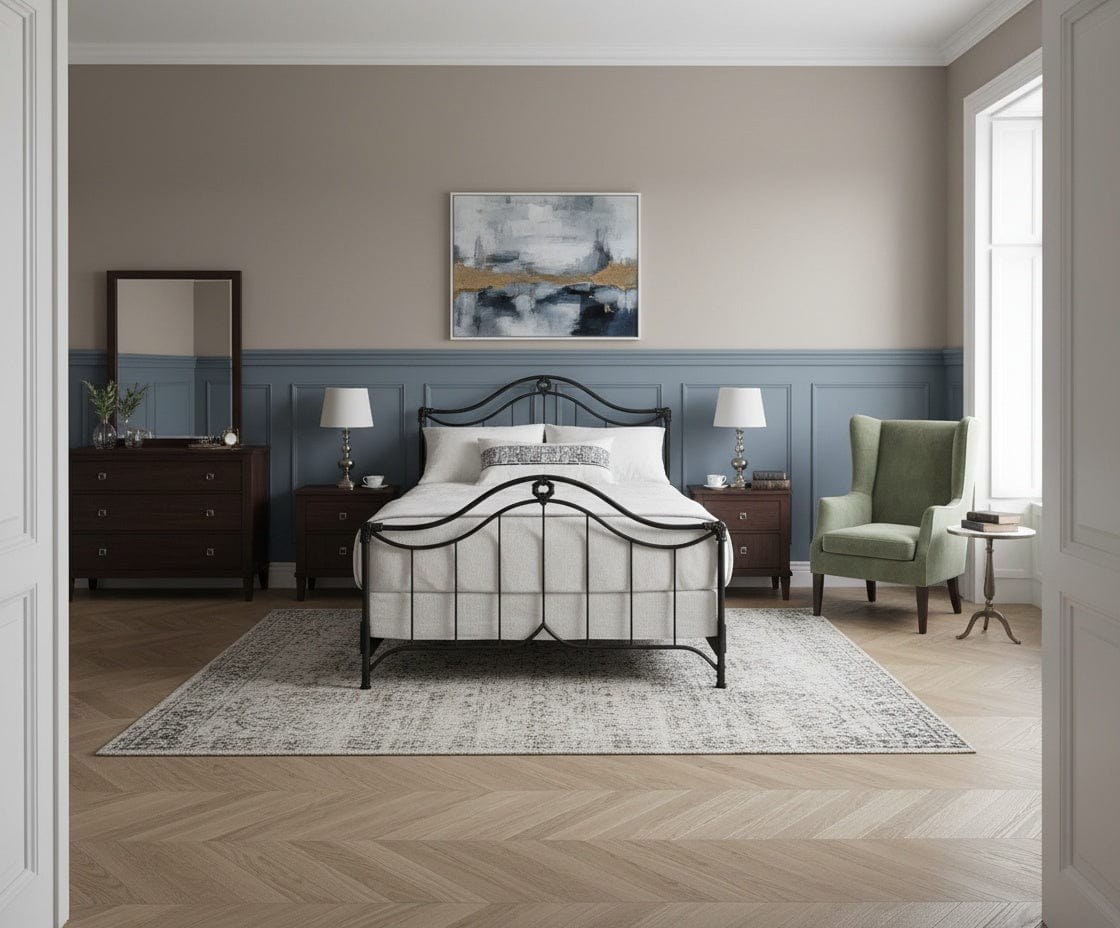
The biggest shift in the last 20 years hasn't been the bedsteads themselves. It's been how they're styled. Where the Victorian bedroom paired an ornate iron bed with heavy drapery, patterned wallpaper, and dark wood furniture, today's bedrooms tend to use the iron frame as a focal point against a much simpler backdrop. For a deeper look at how the Victorian iron bed translates into a modern bedroom without feeling dated, see our dedicated style guide.
The current approach most of our customers take is to let the bedstead do the visual work on its own. White or soft neutral walls. Light bedding in linen or cotton. Minimal additional furniture, usually one or two pieces of wood. The iron bedstead becomes the one piece in the room with architectural presence, and everything else steps back to let it hold center stage.
Finish choice drives how the bedstead reads in a light, modern room. Darker, more aged finishes tend to anchor a pale room and make the bedstead the clear focal point, which works well in minimalist and farmhouse styles where you want one strong piece to carry the room. Lighter patinas and softer tones let the frame recede slightly, which reads better in coastal, transitional, and traditional rooms where the bedstead is part of a layered look rather than the single visual anchor. The result either way is a room that feels both classic and current, which is harder to pull off with almost any other style of bed.
Browse our American Classics collection for the most traditional bedstead designs we build, or our North Haven Traditions collection for slightly more transitional shapes that bridge traditional and contemporary.
Frequently Asked Questions
What is the difference between a bedstead and a bed frame?
The terms are often used interchangeably today, but they carry slightly different connotations. "Bedstead" is the older term, referring specifically to the complete traditional frame of head, foot, and side rails, usually freestanding and built to last. "Bed frame" became the more common term in the 20th century and now covers everything from traditional bedsteads to modern platform frames to simple metal support rails. If someone says bedstead, they almost always mean a traditional design.
What size mattress fits an iron bedstead?
Modern iron bedsteads are built to every standard US mattress size: twin, full, queen, king, and California king. You can use any standard mattress on a modern iron bedstead, with or without a box spring, on top of slats or a platform insert. Antique iron bedsteads from the 19th century sometimes use non-standard historical sizes and may require a custom mattress or a size converter kit, which is one of the practical reasons many customers choose a modern reproduction over an antique frame.
How do I care for an iron bedstead?
Very little care is required. Wipe the frame down with a soft dry cloth every few weeks to remove dust, and use a slightly damp cloth with mild soap for any marks. Avoid abrasive cleaners, scouring pads, or chemical polishes, which can damage the hand-applied finish. Check the hardware at the rail connections once a year and snug any bolts that have loosened with normal use. A quality iron bedstead with a hand-applied finish will develop a natural patina over time, which is part of the character of the material and does not need to be restored or retouched.
Are iron bedsteads noisy?
A well-built iron bedstead should be silent in normal use. Squeaks and rattles in metal beds almost always come from loose hardware, thin tubing that flexes under load, or joints that were never properly welded or ground smooth at the factory. A bedstead built with heavy-gauge steel tubing, solid iron rod spindles, and clean ground welds will stay quiet for the life of the bed. If an iron bed starts squeaking within a year or two of purchase, it's a construction problem, not a characteristic of the style.
Can you use a modern mattress on a traditional iron bedstead?
Yes, with no modification. Modern iron bedsteads are sized for contemporary mattresses and work with memory foam, innerspring, hybrid, and latex mattresses alike. You can use the bedstead with a box spring for a more traditional mattress height, or with slats or a platform insert for a lower, more contemporary profile. The frame itself is style-agnostic about what goes on top of it.
Frequently Asked Questions
Ready to Find Your Perfect Iron Bed?
Browse our collection of handcrafted iron beds, each built to last a lifetime in our Los Angeles workshop.
American Classics collectionAmerican Iron Beds
Handcrafting Iron Beds in Los Angeles Since 1999
For over 27 years, we've been building iron beds by hand in our Los Angeles workshop using construction methods proven since the late 1800s — thick-walled steel tubing, solid iron rod, and hand-poured metal castings. Every bed comes with a lifetime structural warranty.
Continue Reading
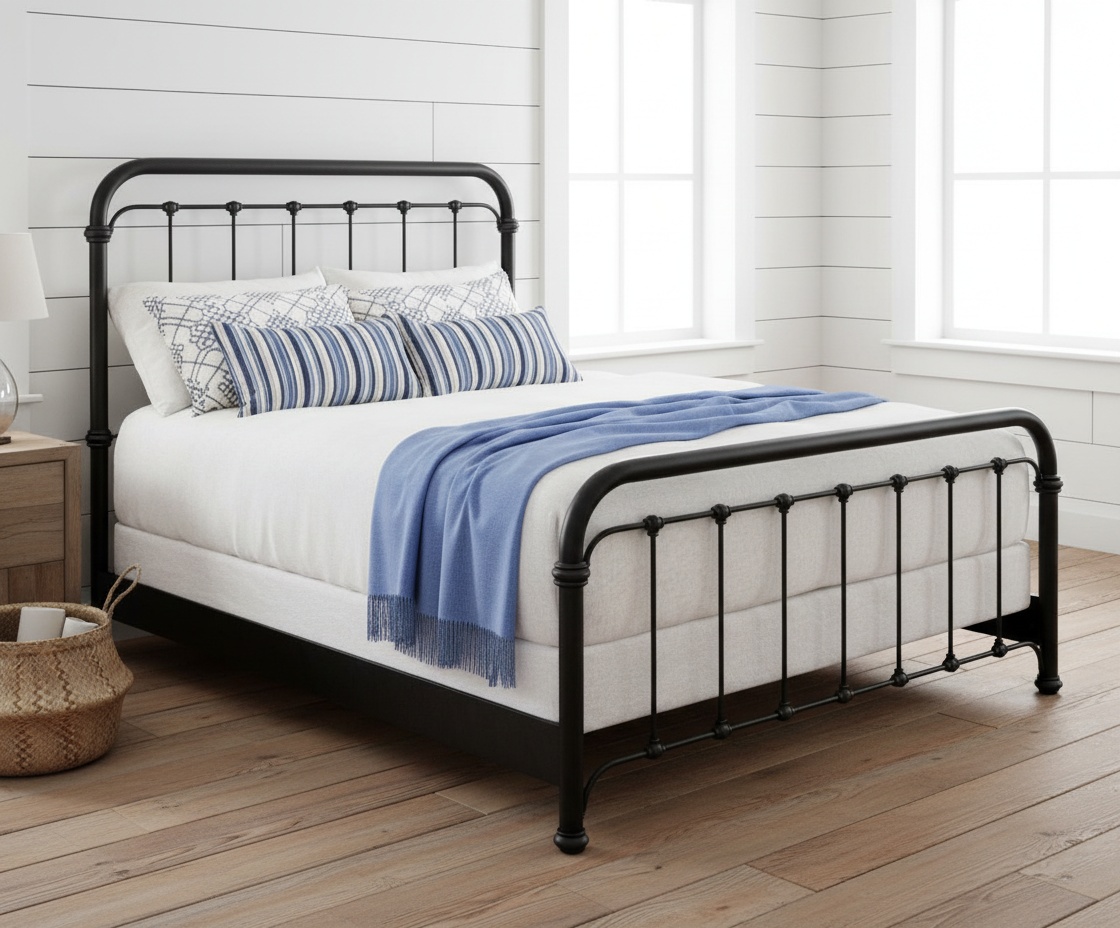 Iron Beds & Frames
Iron Beds: The Complete Buyer's Guide for 2026
Everything you need to know before buying an iron bed frame: types, styles, sizes, construction quality, and care. A comprehensive buyer's guide from a manufacturer with 27+ years of experience.
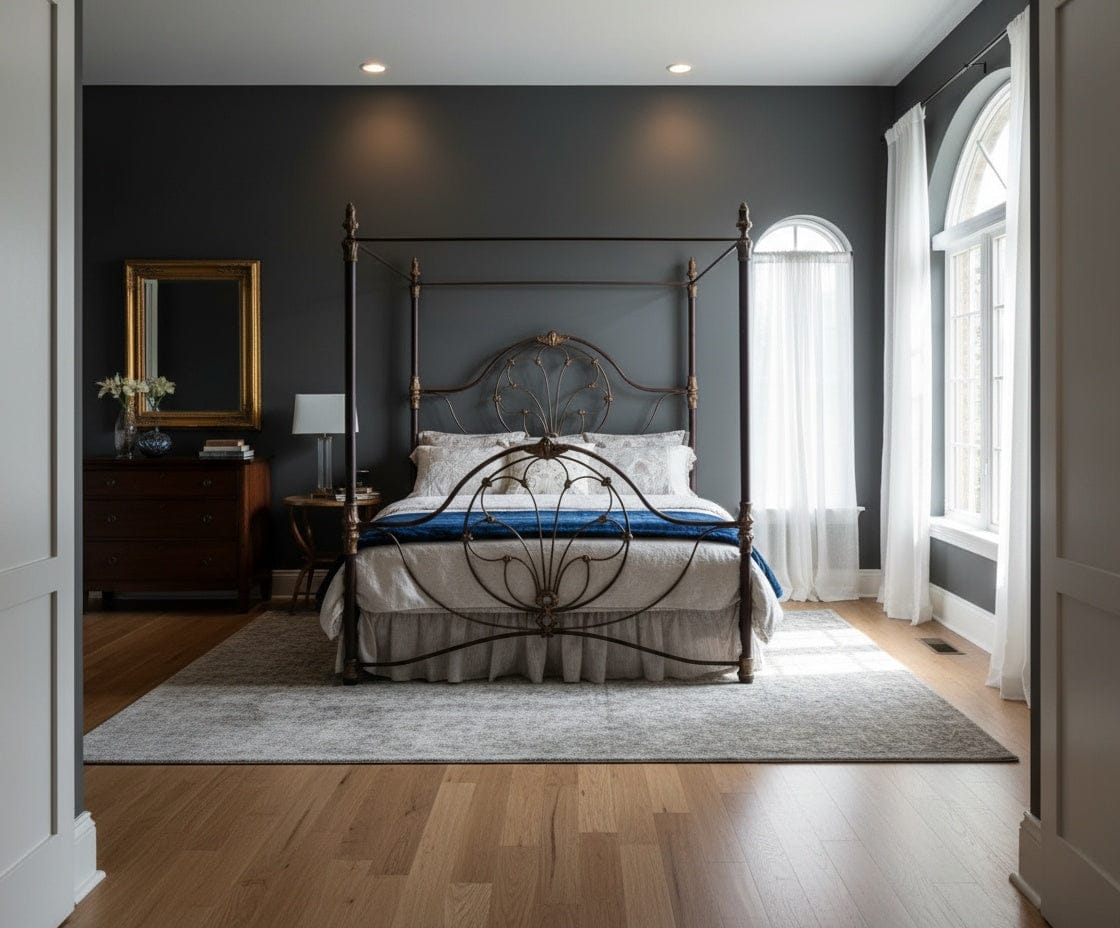 Iron Beds & Frames
Built Like an 1800s Original: The History and Construction of Iron Beds
Explore the history of iron beds from the 1800s to today. Learn how original construction methods — steel tubing, iron rod, and hand-poured castings — survive in modern handcrafted iron bed frames.
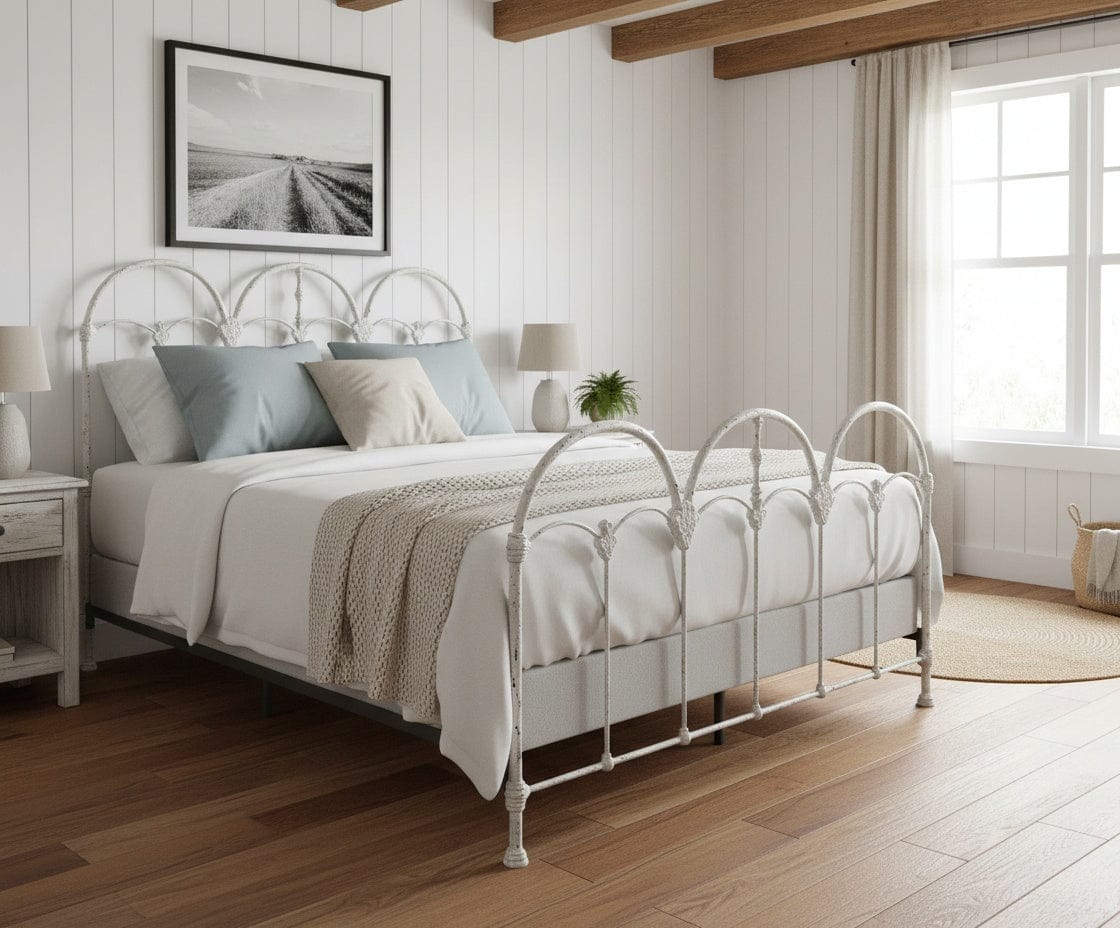 Iron Beds & Frames
Hand-Forged vs Machine-Made: Why Iron Bed Craftsmanship Matters
Learn the real differences between handcrafted and mass-produced iron beds. Compare construction, materials, finishes, and durability before you buy.
 Wrought Iron Beds
Wrought Iron Beds: Styles, Strength & How to Choose the Right One
Everything you need to know about wrought iron beds: styles from Victorian to industrial, construction quality, sizing, finishes, and how to choose the right one.