Brass Beds vs Iron Beds: How Metal Bed Frames Have Evolved
By American Iron Beds · Handcrafting Iron Beds in Los Angeles Since 1999
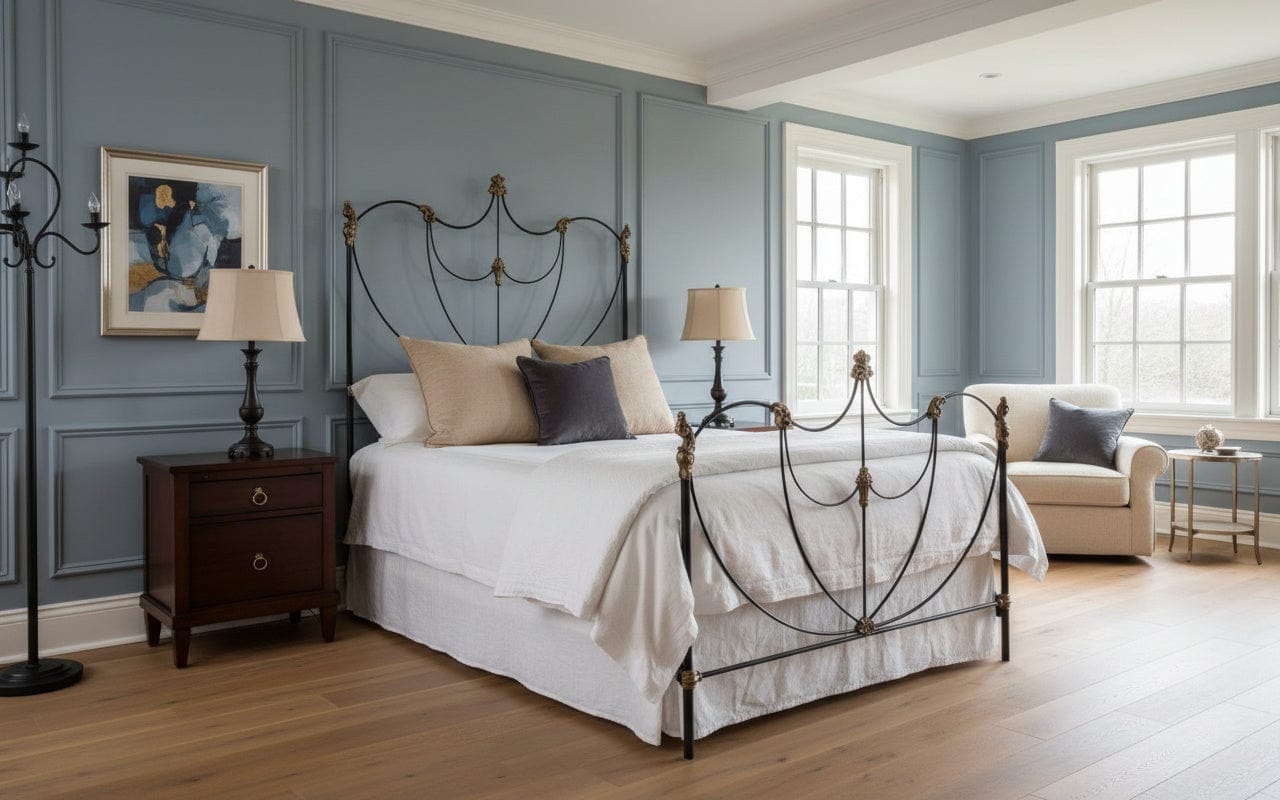
For roughly 40 years in the second half of the 19th century, brass beds were the most desirable bedroom furniture in America. Then they weren't. By the 1920s, iron had overtaken brass as the preferred metal bed frame in nearly every price tier, and a century later, iron is still here while the brass bed has become a specialty curiosity. The story of how that happened is also the story of why a modern iron bed with a brass-toned finish is the smartest way to capture Victorian warmth without inheriting Victorian maintenance.
This guide walks through the golden age of brass, the practical reasons iron replaced it, what the brass vs iron bed market actually looks like today, and how to get a brass iron bed look using a warm-gold finish on a durable iron frame.
The golden age of brass beds
Brass beds dominated high-end Victorian bedrooms from roughly the 1860s through the 1890s. The warm gold glow of polished brass signaled status, taste, and discretionary income in a way few other furniture pieces could. Brass was not a mass-market material. It was an aspirational one, and a brass bed in the master bedroom was a recognizable marker of a comfortable household.
The look worked because brass picks up and reflects ambient light in a way that darker metals cannot. In the gas-lit and early-electric bedrooms of the era, a polished brass headboard caught firelight and lamplight and threw back a warmth that defined the aesthetic of the period. Pair that with the intricate casting and turning work that skilled brass artisans could produce, and a Victorian brass bed was a genuine statement piece.
But maintaining that look required constant work. Brass tarnishes. Exposure to air, humidity, and the oils from human skin produces a dark patina on unsealed brass within weeks. Keeping a brass bed looking like a brass bed meant polishing it on a regular schedule, often monthly, with abrasive compounds that slowly wore through the brass itself. Households with staff handled this invisibly. Households without staff did not.
Why iron replaced brass as the preferred metal bed frame
The shift from brass to iron was driven by four practical forces that compounded each other between the 1890s and the 1920s. Here is how the two metals compare across the dimensions that matter most to buyers.
| Factor | Brass Bed | Iron Bed |
|---|---|---|
| Durability | Softer metal, can bend at stress points | Structurally stronger, holds geometry for decades |
| Maintenance | Regular polishing required to prevent tarnish | Sealed finishes, basic dusting only |
| Price range | Narrow, skewed premium | Wide, from entry-level to high-end |
| Finish range | Polished brass variations only | Black, white, bronze, copper, warm gold, distressed, and more |
| Availability today | Small specialty market, often brass-plated | Dominant metal bed category, full style range |
Durability. Iron is structurally stronger than brass. A properly constructed iron bed frame holds its geometry under decades of load, does not dent under impact, and will not bend at stress points the way brass can. For a piece of furniture expected to last a generation, iron has the clear structural advantage.
Maintenance. Iron finishes, then and now, do not require polishing. A hand-applied patina or painted finish on iron holds its appearance for the life of the bed with basic dusting. Brass demands active care. As Victorian households lost domestic staff through the early 20th century, the labor cost of maintaining a brass bed became a real consideration, and iron started to look smarter on a practical basis.
Price range. Iron could be manufactured across a much wider range of price points than brass. Solid brass construction required expensive raw material and skilled labor. Iron allowed both ornate, high-end frames for the carriage trade and simpler, affordable frames for middle-class bedrooms, which is how iron beds ended up in nearly every American bedroom by the 1890s while brass remained confined to a narrower demographic.
Design versatility. Iron can be cast into more intricate decorative forms than brass at the same cost, and it accepts a wider range of finishes. A single iron design can be produced in matte black, aged bronze, distressed white, or a warm brass-toned gold, while brass is essentially limited to variations on brass. For makers and buyers both, iron offered more creative range.
By the 1920s, iron had won. Brass beds continued to be produced as a niche category, and the style saw a significant revival in the 1970s and 1980s as the Victorian and country aesthetic movements brought brass back into mainstream bedrooms. That revival faded by the 1990s as tastes shifted again, and iron has remained the dominant metal bed frame category ever since. For the longer arc of how iron bed construction developed alongside and past brass, see our guide to the history and construction of iron beds.
Iron beds today vs brass beds today
The modern market reflects the outcome of that century-long shift. Iron beds are the dominant metal bed frame category. Brass beds exist, but mostly as specialty products with significant tradeoffs.
Modern iron beds. Available across every major style from Victorian reproduction to modern industrial. Heavy-gauge steel tubing, hand-poured castings, multi-step hand-applied finishes, and lifetime structural warranties at the quality end of the market. Dozens of finish options spanning black, white, bronze, copper, and warm gold tones. Price range from mass-market imports in the low hundreds to handcrafted domestic beds in the thousands.
Modern brass beds. A much smaller market. Most beds marketed as brass today are brass-plated rather than solid brass throughout, which means a thin layer of brass is bonded over a base metal. The look is similar to solid brass when new, but the plating can wear through at contact points over time and the structural performance is governed by whatever metal sits underneath, not by the brass. Solid brass beds are still made but carry premium pricing relative to iron beds of comparable size and design, and they still require polishing to maintain the polished brass look.
Brass-toned finishes on iron beds. This is where the modern market actually lands for most buyers who love the warmth of brass but want the durability of iron. A warm gold or brass-toned finish on a handcrafted iron frame delivers the Victorian glow without the polishing schedule, the plating wear, or the structural limitations. It is the practical synthesis of the two traditions.
For the full breakdown of how finishes are layered, sealed, and applied on iron beds, see our guide to custom iron bed finishes.
Can you get a brass finish on an iron bed?
Yes, and there are several options depending on how warm, how dramatic, and how period-authentic you want the look to be. We offer six brass-adjacent finishes across our collections.
Brass Bisque is a soft, warm brass-gold tone that adds the glow of brass without the heaviness of darker metallics. It is the most directly brass-like finish we offer and works beautifully in traditional, glamorous, and transitional bedrooms. Available in our Iron Art and North Haven Traditions collections.
Aged Gold is more dramatic than Brass Bisque, with a warm gold base and hand-rubbed depth that reads rich and luminous. Best for rooms designed around gold and warm metallic accents. Available in our Iron Art and North Haven Traditions collections as a designer finish.
Aged Bronze is a rich bronze with dark undertones rubbed into the recesses of the castings and joints. It reads as a warm, aged metallic that looks like it has developed a natural patina over decades. A strong choice when you want warmth without committing to full gold.
Old Copper is a warm reddish-copper with layered depth. Richer and warmer than Aged Bronze, with more color. For rooms that want the metal frame to contribute real warmth to the palette.
Antique Gold is our warm gold option in the American Classics and Dream Gallery collections. More character-driven than Aged Gold, it works particularly well on the ornate traditional designs these collections are known for.
Antique Bronze is a rich bronze with dark undertones on our most ornate traditional frames. The primary metal finish for Victorian-inspired designs where brass would have been the historical choice.
Hand-applied finishes are unique to each piece. Color and patina will vary naturally. Images shown are for reference only.
The advantage of any of these over an actual brass bed is substantial. You get the warm-metal aesthetic without the maintenance, on a frame built with heavier materials and stronger joinery than brass construction allows. For ornate designs with heavy casting work, explore the American Classics or Iron Art collections where brass-toned finishes are most often requested.
Frequently asked questions
Are brass beds still made? Yes, but the market is much smaller than it was in the Victorian era. Most beds marketed as brass today are brass-plated rather than solid brass throughout, with a thin brass layer over a base metal underneath. True solid brass beds are still produced by a handful of specialty makers but carry premium pricing relative to comparable iron beds and still require polishing to maintain the polished brass look.
Is brass or iron better for a bed frame? For most buyers, iron is the better choice. Iron is structurally stronger, lower maintenance, available in a wider range of styles and finishes, and spans a broader price range. Brass offers a distinctive warm gold appearance that no other metal replicates exactly, but it requires ongoing polishing, is less structurally robust, and costs more for comparable construction quality.
Can I get a brass look on an iron bed? Yes. Warm gold and bronze iron bed finishes like Brass Bisque, Aged Gold, Aged Bronze, Antique Gold, and Antique Bronze capture the visual warmth of brass on a heavier and more durable iron frame. You get the Victorian aesthetic without the polishing schedule, the plating wear, or the structural compromises of actual brass construction.
What are the warmest iron bed finishes? The warmest iron bed finishes are the brass, gold, bronze, and copper tones. Brass Bisque and Aged Gold lead the gold family. Aged Bronze and Antique Bronze are the primary bronze options. Old Copper adds reddish warmth. Each reads differently under different lighting, which is why we walk buyers through detailed finish photos before confirming the selection. Finish samples are available on American Classics and Dream Gallery orders, which is where Antique Gold and Antique Bronze live. Iron Art and North Haven Traditions finishes use our website photo references rather than physical samples.
Do brass finishes on iron beds tarnish? No. Brass-toned finishes on iron beds are hand-applied metal finishes sealed against oxidation, not actual brass. They hold their appearance for the life of the bed without polishing and without the gradual tarnish that actual brass develops. This is the core practical advantage of choosing a brass-toned iron finish over a real brass bed.
Frequently Asked Questions
Ready to Find Your Perfect Iron Bed?
Browse our collection of handcrafted iron beds, each built to last a lifetime in Los Angeles by our manufacturing partners.
American Classics collectionAmerican Iron Beds
Handcrafting Iron Beds in Los Angeles Since 1999
Founded in 1999, our iron beds are handcrafted in Los Angeles by our manufacturing partners using construction methods proven since the late 1800s — thick-walled steel tubing, solid iron rod, and hand-poured metal castings. Every bed comes with a lifetime structural warranty.
Continue Reading
 Iron Beds & Frames
Iron Beds: The Complete Buyer's Guide for 2026
Everything you need to know before buying an iron bed frame: types, styles, sizes, construction quality, and care. A comprehensive buyer's guide from a manufacturer with 27+ years of experience.
 Iron Beds & Frames
Built Like an 1800s Original: The History and Construction of Iron Beds
Explore the history of iron beds from the 1800s to today. Learn how original construction methods — steel tubing, iron rod, and hand-poured castings — survive in modern handcrafted iron bed frames.
Iron Beds & FramesCustom Iron Bed Finishes: Your Guide to Colors, Patinas & Coatings
Explore hand-applied iron bed finishes from matte black to antique bronze, farmhouse red, and custom patinas. A complete guide to every finish option for your handcrafted iron bed.
 Wrought Iron Beds
Wrought Iron vs Cast Iron Beds: What's the Difference?
Wrought iron vs cast iron beds: compare composition, weight, durability, design flexibility, and price. Learn which type is used in modern handcrafted iron beds.