What to Look for in a Quality Iron Bed
By American Iron Beds · Handcrafting Iron Beds in Los Angeles Since 1999

A quality iron bed is one of the few pieces of furniture you can expect to outlive. Buy well and you own a bed for generations. Buy poorly and you own a short-lived frame that squeaks, rusts, or wobbles within eighteen months. The difference between the two is not luck. It comes down to seven measurable markers of construction that separate a genuine heirloom iron bed from a cheap imitation.
Knowing what to look for is how you avoid paying quality-level prices for mass-market fabrication. If you are searching for the best quality wrought iron beds, or comparing handmade iron beds against high end iron beds from larger retailers, this guide walks through the seven markers, the red flags that expose a bad bed before you ever click buy, and the questions to ask any seller before you commit.
Why quality matters more with iron beds than almost any other furniture
An iron bed is one of the only pieces of bedroom furniture built to become a generational object. The wood of an upholstered bed breaks down. Fabric wears, sags, and dates. Veneers chip. Laminates peel. A properly built iron bed does none of these things. The frame is metal, the joints are welded, and the structure will still be standing long after the mattress, the bedding, and the room around it have been replaced three times over.
That is what heirloom quality actually means. An heirloom iron bed is not a marketing phrase. It is a bed engineered to last across generations because iron, unlike wood or foam, does not fatigue when you treat it well. This is why the classic iron bedstead has survived as a bedroom style for more than 150 years.
The price difference between a quality iron bed and a cheap one is typically three to five times. The lifespan difference is far greater. A $400 imported iron bed that fails in two years is more expensive per year of use than a $2,000 handcrafted iron bed that lasts for decades. When you evaluate iron beds, you are not really comparing price points. You are comparing cost per decade of ownership, and the math is not close.
7 markers of a quality iron bed frame
Every quality marker on this list is something a good maker will tell you openly and a cheap manufacturer will avoid. If a seller cannot answer these questions with specifics, that is your answer.
1. Tubing wall thickness
The single most important marker. Iron beds are built from steel tubing, and the wall thickness of that tubing is the main driver of frame strength, silence, and longevity. A quality iron bed uses heavy-gauge, thick-walled steel tubing throughout the headboard, footboard, and side rails. A cheap iron bed uses thin-walled steel or, worse, hollow aluminum that has been painted to look like iron.
Thin-walled tubing flexes under load, which directly limits iron bed weight capacity under heavier sleepers. That flex is the root cause of the squeak, the rattle, and the slow loosening of joints that turns a cheap iron bed into a nuisance within a year. Heavy-gauge tubing does not flex. The frame stays silent and tight because the metal itself is not moving.
When you ask a seller about tubing thickness and they cannot answer, or they change the subject, you have your answer. A serious maker will tell you exactly what gauge of steel they use and why.
2. Solid iron rod vs hollow tube for spindles and bars
Look at the vertical spindles and horizontal bars that form the decorative pattern of a headboard. On a quality iron bed these are solid iron rod. On a cheap bed they are hollow tubes welded to thin plates. Solid rod is heavy, silent, and permanent. Hollow tubes rattle, dent, and transmit every small movement across the frame. The result is a frame that fails as a master bedroom centerpiece because it cannot project the visual presence a primary suite needs. The same construction quality matters in a guest room, where a polished frame must look fresh after sitting unused for weeks.
You can usually tell by weight and feel alone. A solid-rod headboard is noticeably heavier to lift and feels dense when you tap it. A hollow-tube version is light in the hand and rings when you knock on it. The difference is obvious the moment you have both side by side.
3. Hand-poured castings vs stamped or pressed decorative elements
The decorative castings on an iron bed are the scrollwork, the finials, the rosettes, and the joint covers that give each design its character. On a quality iron bed these are hand-poured metal castings formed in individual molds. On a cheap iron bed they are stamped out of thin metal sheets or pressed from resin and painted.
Hand-poured castings are heavy, three-dimensional, and slightly irregular. You can feel the weight of them when you run a hand over the headboard. Stamped elements feel flat, identical, and hollow. Over time stamped pieces warp or separate from the frame because they were glued or spot-welded rather than cast into the joint itself.
Our own castings are hand-poured at our workshop, and if you look closely at any of our beds you can see the subtle variations from piece to piece. This is the hallmark of construction that has been done by hand rather than run through a stamping press.
4. Weld quality
On a quality iron bed, every weld is ground smooth and finished to the point where you cannot see it. The joint looks like a single continuous piece of metal. On a cheap iron bed, the welds are visible as raised beads or rough seams at every joint. Sometimes the grinding is skipped entirely and the seam is just painted over.
Visible welds are a sign of a rushed production process. They also tend to be weaker. A properly finished weld has been inspected, ground, and refinished to verify full penetration of the joint. A visible weld is often a surface-only tack that will crack under load over time.
Before you buy an iron bed, ask for close-up photos of the joints. If the seller has nothing to show, or the photos show obvious weld beads, the frame was built for speed, not longevity.
5. Finish application
A quality iron bed is finished through a multi-step, hand-applied process that builds depth, character, and durability into the metal surface. A cheap iron bed gets a single spray coat of paint and a clear overspray. One is a finish. The other is decoration.
Hand-applied finishes hold up to long-term indoor use because they include primer, base, patina, and sealer layers that bond with the metal in sequence. Spray-coat finishes chip, scratch, and fade because there is nothing underneath them but bare steel. Over time a cheap finish will wear through at every contact point and expose metal that will begin to oxidize.
Hand-applied finishes are unique to each piece. Color and patina will vary naturally. Images shown are for reference only.
For a deeper look at how finishes are built, layered, and sealed, see our guide to custom iron bed finishes.
6. Overall weight of the frame
Weight is the quickest way to test a quality claim. A properly built queen-size iron bed typically weighs between 100 and 150 pounds assembled, with the exact number depending on design complexity and the amount of casting work in the headboard. Kings scale up proportionally, and twins come in lighter. If a seller advertises a queen iron bed that weighs 40 or 50 pounds, the frame is either thin-walled steel, aluminum, or some combination of the two with hollow tubes throughout.
Sellers who care about weight publish it. Sellers who do not, hide it. When the weight is not in the specs, ask. A refusal to answer is an answer.
7. Warranty
The warranty tells you exactly what the manufacturer believes about their own construction. A quality iron bed carries a lifetime structural warranty against defects in materials and workmanship. A cheap iron bed carries a one-year limited warranty, or no warranty at all.
Read what a lifetime warranty actually covers. A good one covers the frame, the welds, the structural integrity, and any manufacturing defect for as long as you own the bed. A bad one covers the finish for 90 days and walks away from anything structural.
For a fuller comparison of how handcrafted iron beds are built from raw material to finished frame, see our guide to hand-forged vs machine-made iron beds.
Red flags when shopping for iron beds online
Once you know what quality looks like, the warning signs become obvious.
Stock photos instead of actual product images. A seller using computer-rendered or stock imagery is either dropshipping the product from overseas or cannot show the real thing because the real thing would not hold up to the photo. Real manufacturers photograph real beds in real rooms.
No information about materials or construction methods. If a product page lists only dimensions and a finish name, there is a reason. A quality maker will tell you what the frame is built from and how.
Vague country of origin. Imported is not a country. If a seller cannot or will not tell you where a bed is made, assume the worst.
No weight listed for the frame. Weight is a hard number. A seller who leaves it off the spec page is hiding it.
Limited or no warranty. A one-year limited warranty on a bed frame is the manufacturer telling you how long they expect it to last.
Prices that seem too good to be true. A complete queen iron bed under $300 is not a deal. It is a signal that the frame uses the cheapest available materials and construction methods. A real iron bed costs what it costs for reasons rooted in the physical cost of heavy-gauge steel, solid rod, and hand labor.
If a listing shows two or more of these signs, move on. You cannot save your way into a quality iron bed.
For a direct look at how we compare against other iron bed sellers on construction and materials, see our iron bed competitor comparison.
Where are quality iron beds made?
Iron beds are produced in a handful of regions. The largest volume of imported iron beds comes from Vietnam, China, and Mexico, which is where most mass-market retail iron beds originate. High quality iron beds come from specialty domestic workshops, where production runs are smaller, materials are heavier, and the labor per bed is measured in hours rather than minutes.
Where a bed is made matters for three practical reasons. First, warranty support is genuinely responsive when the maker is reachable by phone and the frame is built in the same country you live in. Second, custom options like non-standard sizes and specific finish combinations are actually available, because the workshop has the flexibility to run single-bed production. Third, shipping damage drops dramatically when the bed does not need to cross an ocean inside a container.
Every bed we build is made in Los Angeles by our manufacturing partners. We have been handcrafting iron beds for more than 25 years. If you are choosing between a genuine antique and a modern build, see our comparison of antique iron beds and a quality reproduction iron bed on construction, sizing, and safety. For a fuller breakdown of why American made iron beds are worth the investment, see our domestic manufacturing guide. You can read more about our workshop and process on our about page.
Frequently asked questions
How much should a quality iron bed cost? Expect to pay $700 to $5,000 or more for a quality iron bed frame depending on size, design complexity, and finish. Beds priced under $300 for a queen almost always use thin-walled tubing and single-coat spray finishes that will not hold up. Quality has a floor, and that floor is not cheap.
How can I tell if an iron bed is well made without seeing it in person? Ask the seller three questions: what is the wall thickness of the steel tubing, are the decorative castings hand-poured or stamped, and what is the assembled weight of the frame. A quality manufacturer will answer all three with specifics. A cheap seller will deflect, generalize, or not respond. Also require a lifetime structural warranty before you buy.
Do heavy duty iron beds squeak? A properly built iron bed with tight welded joints, solid iron rod spindles, and heavy-gauge tubing should never squeak. Squeaking is a symptom of poor construction, specifically loose joints, flexing thin-walled tubes, or inadequate hardware. If you are hearing squeaks on a new bed, the frame was built to cost, not to last.
What is the best brand of wrought iron bed? The best wrought iron beds come from specialty domestic workshops rather than mass-market furniture brands. Look less at brand name and more at construction specifics: heavy-gauge steel tubing, solid iron rod spindles, hand-poured castings, ground-smooth welds, multi-step hand-applied finishes, and a lifetime structural warranty. A lesser-known maker meeting all six criteria will outlast a well-known brand that meets only two.
Is a heavy iron bed harder to move? Yes, and that is a feature rather than a drawback. A 100 to 150 pound queen iron bed does not shift on the floor, does not slide when you sit on the edge, and does not need anti-tip hardware. Moving it to a new room or home requires two people and the ability to disassemble the headboard, footboard, and side rails, which all separate during moves. Most of our customers move the bed once or twice a decade at most.
Frequently Asked Questions
Ready to Find Your Perfect Iron Bed?
Browse our collection of handcrafted iron beds, each built to last a lifetime in Los Angeles by our manufacturing partners.
American Classics collectionAmerican Iron Beds
Handcrafting Iron Beds in Los Angeles Since 1999
Founded in 1999, our iron beds are handcrafted in Los Angeles by our manufacturing partners using construction methods proven since the late 1800s — thick-walled steel tubing, solid iron rod, and hand-poured metal castings. Every bed comes with a lifetime structural warranty.
Continue Reading
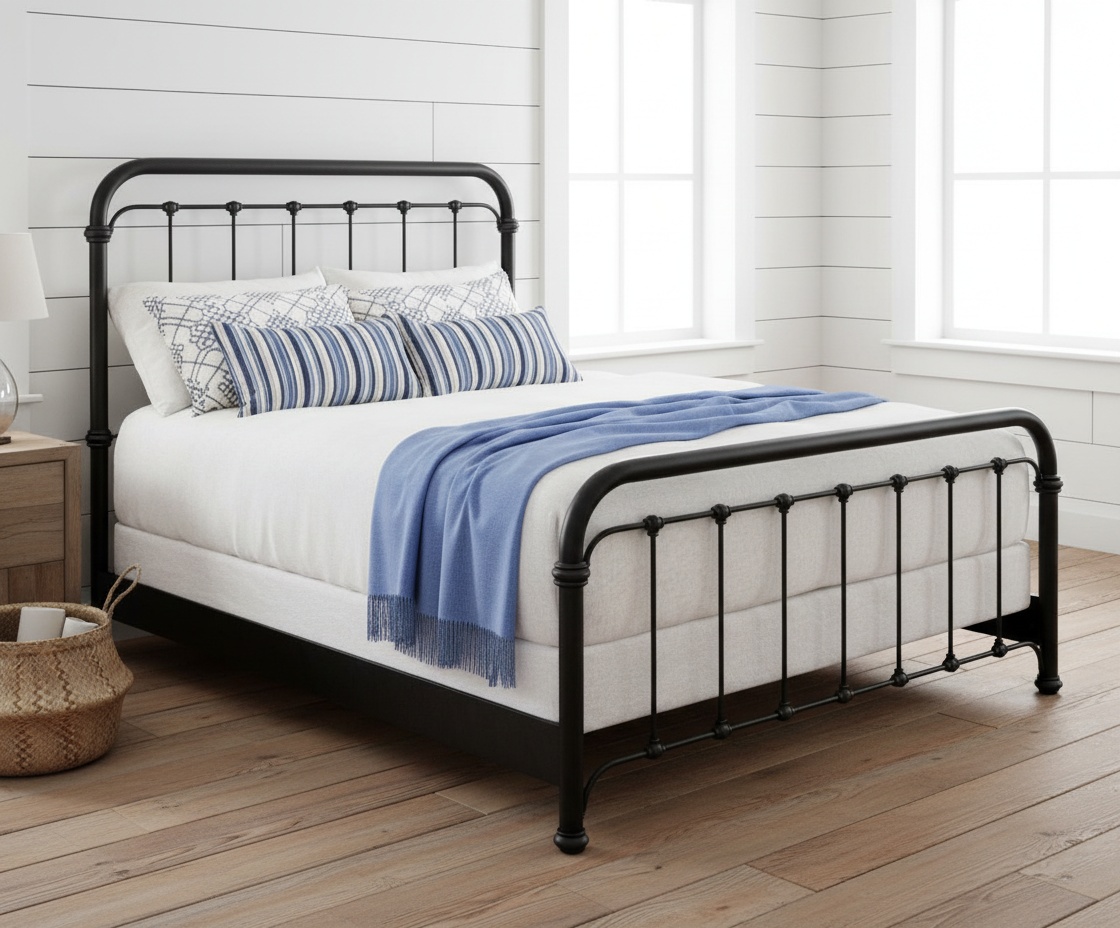 Iron Beds & Frames
Iron Beds: The Complete Buyer's Guide for 2026
Everything you need to know before buying an iron bed frame: types, styles, sizes, construction quality, and care. A comprehensive buyer's guide from a manufacturer with 27+ years of experience.
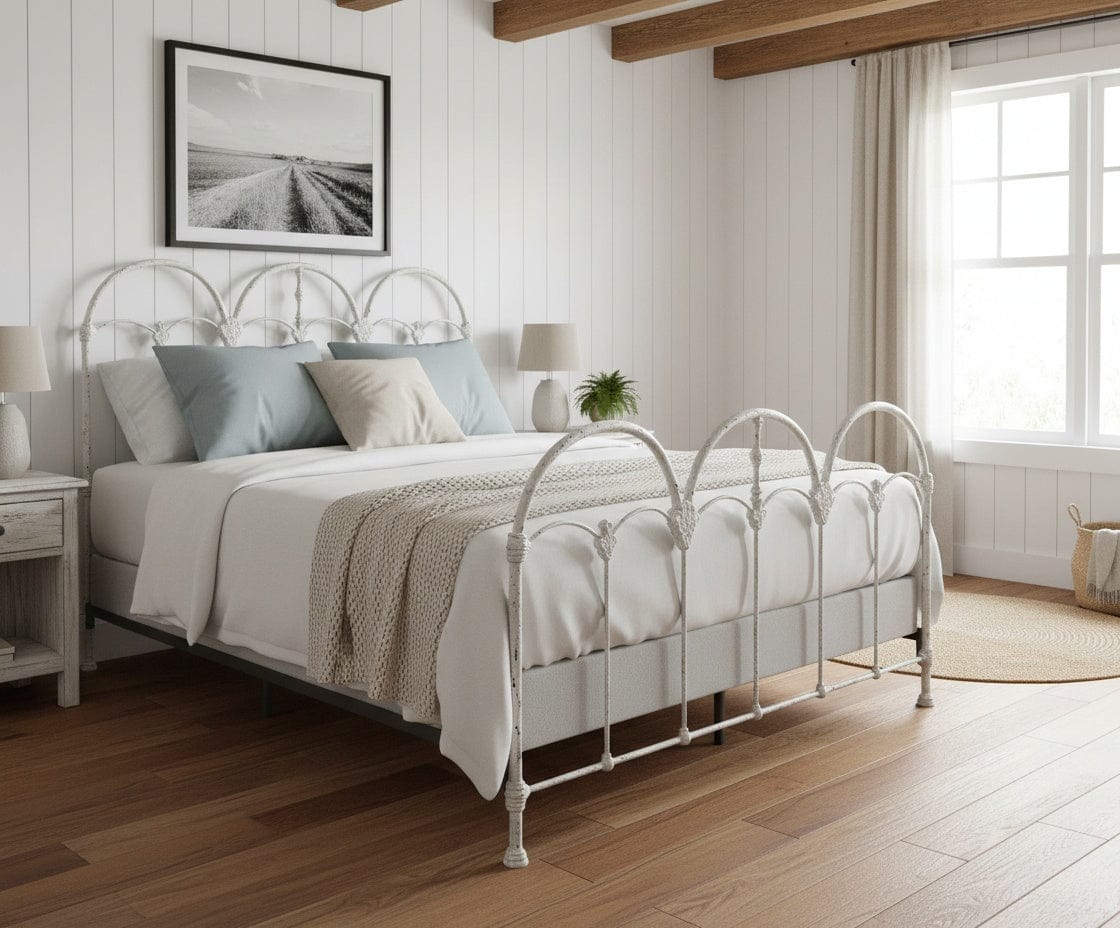 Iron Beds & Frames
Hand-Forged vs Machine-Made: Why Iron Bed Craftsmanship Matters
Learn the real differences between handcrafted and mass-produced iron beds. Compare construction, materials, finishes, and durability before you buy.
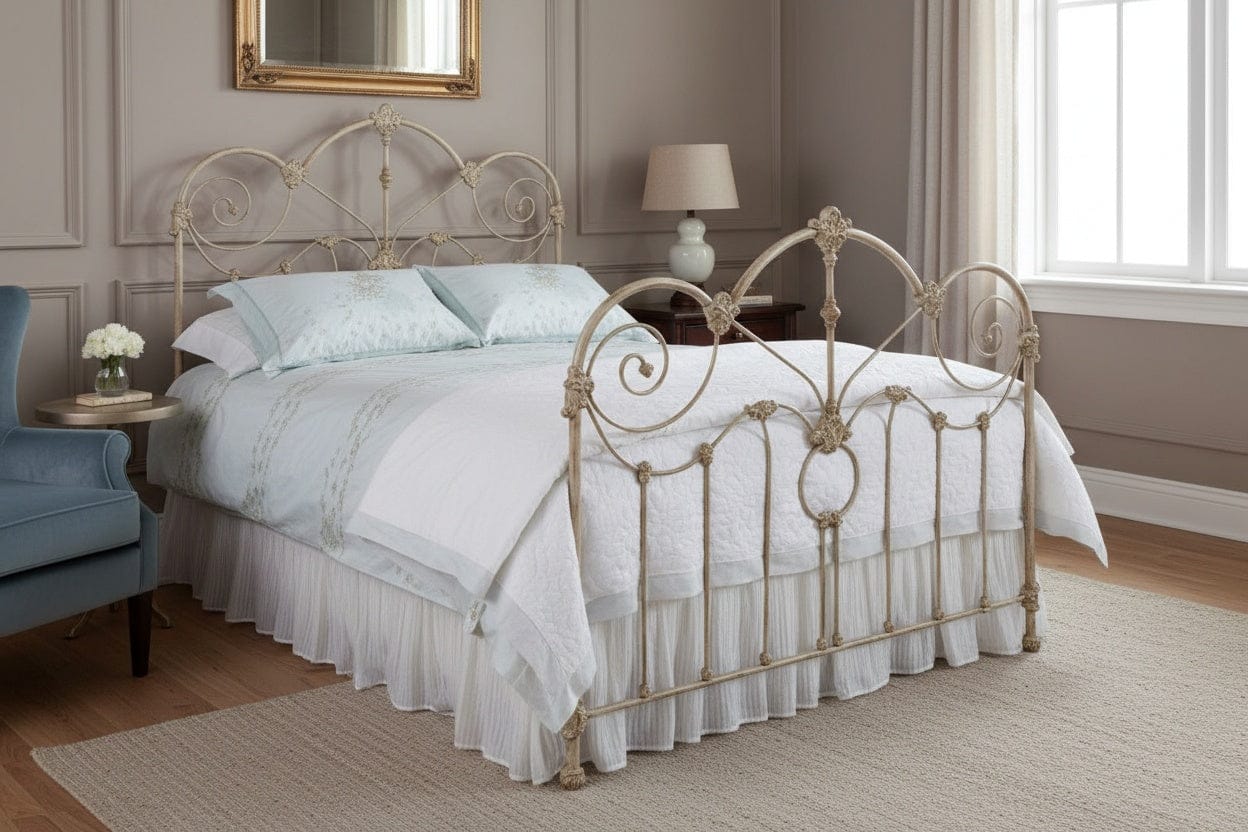 Iron Beds & Frames
American Iron Beds vs the Competition: What Sets Handcrafted Apart
Compare iron bed companies on materials, construction, finishes, warranty, and customization. See why handcrafted American-made iron beds outperform the rest.
 Iron Beds & Frames
Custom Iron Bed Finishes: Your Guide to Colors, Patinas & Coatings
Explore hand-applied iron bed finishes from matte black to antique bronze, farmhouse red, and custom patinas. A complete guide to every finish option for your handcrafted iron bed.