Antique Iron Beds vs Modern Reproductions: What Is the Difference?
By American Iron Beds · Handcrafting Iron Beds in Los Angeles Since 1999
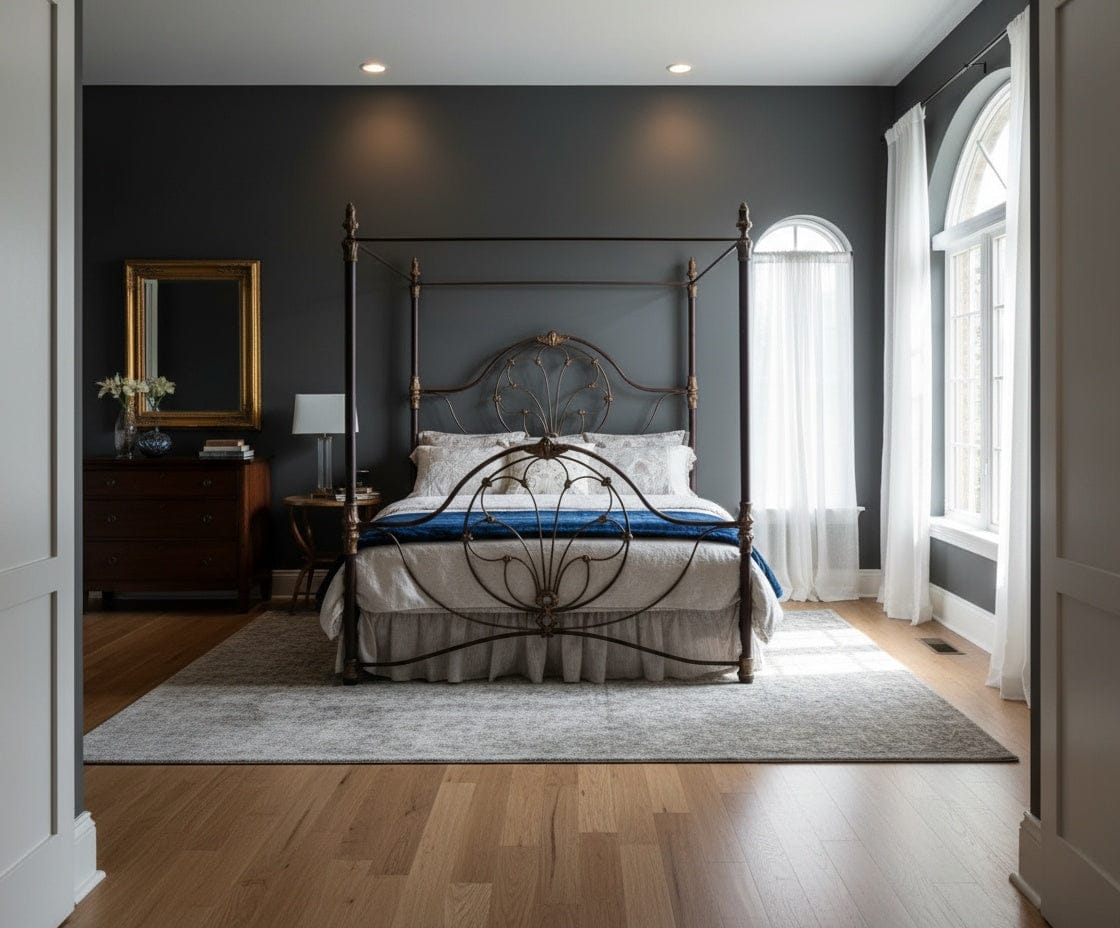
If you are shopping for antique iron beds, you are in one of two places. Either you want a genuine 19th or early 20th century bed with the patina, history, and character that only real age produces. Or you are looking at antique reproduction iron beds because you want the Victorian aesthetic on a new frame that fits your mattress, carries a warranty, and does not require six months of research to verify. Both are legitimate choices, and they lead to very different buying experiences.
This guide walks through the real appeal of antique iron beds, the practical challenges they carry, what distinguishes a quality reproduction wrought iron bed, and how to decide which path makes sense for your situation.
The genuine appeal of antique iron beds
Antique iron beds earn their reputation for good reasons. A bed that has survived 100 to 150 years of continuous use has already passed the most demanding durability test any piece of furniture can face. What you hold when you buy one is a real object with a real history, not a recreation of one.
Genuine patina and character. The depth of surface aging on a 130-year-old iron bed cannot be artificially produced. Decades of light exposure, handling, and gradual oxidation create a texture and coloration that no finishing technique fully replicates. For buyers who value authenticity as a primary quality, nothing else delivers the same result.
Real provenance. A well-documented antique iron bed carries a story. It came from a specific hotel in Saratoga Springs, a boarding house in Memphis, a family home in rural Pennsylvania. That provenance is real, and it matters to the buyer who cares about the object's history as much as its appearance.
Environmental appeal. Buying an antique keeps a piece of furniture in circulation that would otherwise be stored, discarded, or melted down. For buyers prioritizing reuse over new manufacturing, an antique is genuinely the greener choice.
One-of-a-kind designs. Many 19th century iron bed designs were produced in small regional foundries that closed long ago. The specific casting patterns, scrollwork, and proportions from those workshops cannot be ordered new. If you fall in love with a particular antique design, the antique itself is usually the only way to own it.
For the longer story of how iron bed construction developed through the Victorian era and beyond, see our guide to the history and construction of iron beds.
The practical challenges of buying antique iron beds
These are the considerations that often surprise first-time antique buyers and that the market does not always advertise clearly. They are not reasons to avoid antiques. They are reasons to go in informed.
Non-standard mattress sizes. Modern mattress sizes (twin, full, queen, king) were not standardized until the mid-20th century. An antique iron bed built in 1890 was sized to whatever mattress convention existed at the time, which often does not match anything you can buy off the shelf today. Some antiques come close to modern full or twin dimensions. Others are meaningfully smaller in width or length. Before buying, measure the interior rail-to-rail dimensions and compare to current mattress sizes. You may need a custom mattress or adapted rails to make the bed usable.
Lead paint risk on older beds. Lead-based paint was banned for residential use in the United States in 1978, but it was widely used on iron furniture before that date. An iron bed manufactured or refinished before 1978 may have lead in its paint layers, particularly if it has not been stripped and refinished since. If you buy an antique iron bed that has not been professionally restored, assume the finish may contain lead until tested. Lead test kits are inexpensive and available at most hardware stores, and proper remediation requires professional stripping and refinishing. Do not sand, scrape, or strip old iron bed finishes yourself without testing first.
No structural warranty or guarantee. When you buy a 130-year-old bed, you are buying it as-is. The welds, joints, and structural integrity are whatever the last century of use has left them. If a side rail fails under load two years after purchase, there is no manufacturer to call and no recourse beyond your own repair or replacement.
Missing or incompatible side rails. Antique headboards and footboards survive at much higher rates than the original side rails, because rails are more likely to be damaged, discarded, or separated during decades of moves. Many antique iron beds for sale today are headboard-and-footboard only, requiring custom rails to be fabricated to fit. This is doable but adds cost and lead time.
Difficulty finding matching pairs. For guest rooms or children's rooms where two matching beds are needed, finding a genuine antique pair of twin iron beds in the same design is genuinely difficult and often expensive. The probability that two identical beds from the same 19th century maker survived together is low, and matched pairs command significant premiums when they appear.
Restoration costs. A common scenario: you buy a beautiful antique iron bed for $400, then discover it needs professional stripping (for the lead paint), custom rail fabrication (because the originals are missing), re-welding of a stress crack, and a new finish. The $400 purchase becomes a $2,000+ project by the time it is usable. Restoration can be absolutely worth it for the right piece, but the total cost is often a multiple of the purchase price, not a small addition to it.
What makes a quality reproduction iron bed
A quality reproduction iron bed is not a shortcut. It is a bed built using the same construction methods the 19th century foundries used, adapted to modern mattress sizes and safety standards. When the reproduction is done seriously, the construction is structurally equivalent to or better than most antiques on the market.
Same period-authentic methods. Heavy-gauge steel tubing, solid iron rod spindles, hand-poured castings, welded joints ground smooth, multi-step hand-applied finishes. This is exactly the approach used by the best Victorian iron bed makers, continued into the present. For a closer look at how these methods separate handcrafted beds from mass-produced frames, see our guide to hand-forged vs machine-made iron beds.
Built for modern mattresses. Every standard mattress size from twin through California king fits without modification. Rails are designed, built, and delivered as part of the bed.
Modern lead-free finishes applied by hand. All our finishes are applied by hand using modern, lead-free materials that meet current U.S. safety standards. You get the aged appearance of an antique without the health and remediation concerns that come with actual old paint.
Hand-applied finishes are unique to each piece. Color and patina will vary naturally. Images shown are for reference only.
Lifetime structural warranty. Our reproduction iron beds carry a lifetime structural warranty covering welds, joints, and frame integrity. This is the protection an antique cannot offer and that a thoughtfully built reproduction can.
Customization options. Rail height adjustments, finish combinations, non-standard sizing. Our American Classics and Dream Gallery collections offer the widest customization range, which is exactly the kind of flexibility an antique cannot provide.
American workshop construction. Every reproduction we sell is handcrafted in Los Angeles by our manufacturing partners. For more on the practical advantages of domestic iron bed manufacturing, see our guide to why American made iron beds are worth the investment.
For the full set of construction markers that distinguish a quality iron bed of any era, see our guide to what to look for in a quality iron bed.
Price comparison: antique vs reproduction
Sticker prices rarely tell the full cost story.
Antique iron beds. Purchase price typically ranges from $200 to $2,000 or more depending on size, condition, rarity, provenance, and design. A simple single headboard in rough condition sits at the low end. A complete matched set with documented provenance and intact original finish sits at the high end. But the purchase price is rarely the total cost. Factor in professional lead remediation, custom rail fabrication, structural repair, refinishing, and a custom mattress if the bed does not match modern sizes. Total cost of ownership often lands in the $1,500 to $5,000+ range once the bed is actually sleep-ready.
Quality reproduction iron beds. Purchase price typically ranges from $700 to $5,000 or more depending on size, design complexity, and finish. The frame arrives ready to use with standard-size mattress compatibility, a lifetime structural warranty, and no restoration required. The total cost of ownership is the purchase price plus shipping, with no hidden remediation or fabrication work on the back end.
For most buyers, a quality reproduction comes in at roughly the same total cost as a fully restored antique, but with a predictable upfront price, no uncertainty about structural integrity, and a warranty behind the purchase.
Antique iron bed vs reproduction: the comparison at a glance
| Factor | Antique Iron Bed | Quality Reproduction |
|---|---|---|
| Authenticity | Genuine 19th or early 20th century | Period-authentic construction methods |
| Mattress fit | Often non-standard, may require custom | Fits all standard modern sizes |
| Lead paint risk | Possible on pre-1978 finishes, requires testing | Modern lead-free finishes |
| Structural warranty | None, sold as-is | Lifetime structural warranty |
| Side rails | Often missing or damaged, may need fabrication | Included and matched to frame |
| Customization | None | Finish, height, and sizing options available |
| Total cost, ready to sleep | $1,500 to $5,000+ including restoration | $700 to $5,000+ as delivered |
| Best for | Collectors, authenticity-first buyers | Daily use, modern mattress compatibility |
How to decide which is right for you
Choose an antique iron bed if:
- The specific aesthetic or design of a particular antique is central to what you want, and no reproduction matches it
- You value documented provenance and real age over practical convenience
- You enjoy restoration as a project and are prepared for the time and cost involved
- You are flexible on mattress sizing or are willing to commission a custom mattress
- You are not relying on the bed for heavy daily use in a child's room or high-traffic guest room
Choose a quality reproduction iron bed if:
- You want the Victorian or antique aesthetic without the restoration commitment
- You need the bed to fit a standard modern mattress you already own or plan to buy
- A lifetime structural warranty matters to you
- You want the option to customize finish, height, or sizing
- You need a matching pair for a guest room or children's room
- You want to know what you are paying up front, with no hidden restoration costs
For most buyers furnishing a primary bedroom with a modern mattress and expecting decades of daily use, a quality reproduction is the more practical choice. For collectors and buyers motivated by authenticity and history, a genuine antique is often worth the additional work.
Browse our reproduction iron bed collections to see period-authentic designs built in Los Angeles by our manufacturing partners with modern materials and safety standards.
Frequently asked questions
Are reproduction iron beds as good as antiques? A well-built reproduction using the same period-authentic methods (hand-poured castings, heavy-gauge steel tubing, solid iron rod, hand-applied finishes) is structurally equivalent to or better than most antiques on the market, for three reasons. Reproductions use modern welding techniques that create consistently strong joints. They use lead-free finishes that meet current safety standards. And they come with a lifetime structural warranty an antique cannot match. For authenticity, an antique is the real thing. For practical quality and daily use, a quality reproduction typically outperforms.
How can I tell if an iron bed is a genuine antique? Look for signs of age that cannot be faked. Original casting mold seams and slight irregularities between matching decorative elements. Hand-filed weld joints rather than machine-ground ones. Period-appropriate design elements from the relevant era (Victorian, Eastlake, Art Nouveau, early 20th century). Natural patina on unfinished or worn areas. Documentation of provenance from a reputable dealer. Be cautious of "antiques" sold online with no documentation, uniform construction details that look too clean, or prices that seem unusually low for the claimed age.
Can I use a modern mattress on an antique iron bed? Sometimes, and sometimes not. Antique iron beds predate modern standardized mattress sizes, so dimensions vary. Some 19th century beds fit modern full or twin mattresses closely enough to work with minor adjustments. Others are meaningfully smaller and require either a custom mattress or adapted side rails. Always measure the interior rail-to-rail dimensions of an antique bed before buying and compare to the exact dimensions of the mattress you plan to use.
Are antique iron beds safe? With proper precautions, yes. The primary safety concern is lead paint on finishes applied before the 1978 U.S. ban. If the antique has not been professionally stripped and refinished since, assume the finish may contain lead until tested with an inexpensive home kit. Do not sand, scrape, or strip the finish yourself without testing. The structural safety of the frame depends on the specific bed, and any antique should be inspected for weld cracks, rail damage, and joint integrity before use. A professionally restored antique from a reputable dealer is generally safe for normal use.
What is an old iron bed worth? Values range widely based on condition, completeness, maker, design, and provenance, and also vary meaningfully by region and sales platform. Estate sales, antique dealers, and online auction sites price the same bed very differently, and regional markets in New England, the South, and the Midwest have their own dynamics. As general national guidance: a rough-condition headboard without rails might sell for $100 to $300. A fully intact, unrestored bed in good condition typically sells for $400 to $1,000. A documented high-end antique with original finish, matching rails, and strong provenance can reach $2,000 to $5,000 or more. Identifiable designer or maker marks, intact original castings, and period-correct hardware all increase value. Missing rails, replacement parts, and refinished surfaces typically decrease it.
Frequently Asked Questions
Ready to Find Your Perfect Iron Bed?
Browse our collection of handcrafted iron beds, each built to last a lifetime in Los Angeles by our manufacturing partners.
American Classics collectionAmerican Iron Beds
Handcrafting Iron Beds in Los Angeles Since 1999
Founded in 1999, our iron beds are handcrafted in Los Angeles by our manufacturing partners using construction methods proven since the late 1800s — thick-walled steel tubing, solid iron rod, and hand-poured metal castings. Every bed comes with a lifetime structural warranty.
Continue Reading
 Iron Beds & Frames
Iron Beds: The Complete Buyer's Guide for 2026
Everything you need to know before buying an iron bed frame: types, styles, sizes, construction quality, and care. A comprehensive buyer's guide from a manufacturer with 27+ years of experience.
Iron Beds & FramesBuilt Like an 1800s Original: The History and Construction of Iron Beds
Explore the history of iron beds from the 1800s to today. Learn how original construction methods — steel tubing, iron rod, and hand-poured castings — survive in modern handcrafted iron bed frames.
 Iron Beds & Frames
What to Look for in a Quality Iron Bed
The 7 markers of a quality, heirloom iron bed: thick-walled tubing, hand-poured castings, finish, weight, and what to ask before buying.
 Iron Beds & Frames
Why American Made Iron Beds Are Worth the Investment
American made iron beds deliver heavier materials, hand-applied finishes, custom options, and lifetime warranties imports cannot match.