What Are Rod Iron Beds? Iron Bed Terminology Explained
By American Iron Beds · Handcrafting Iron Beds in Los Angeles Since 1999
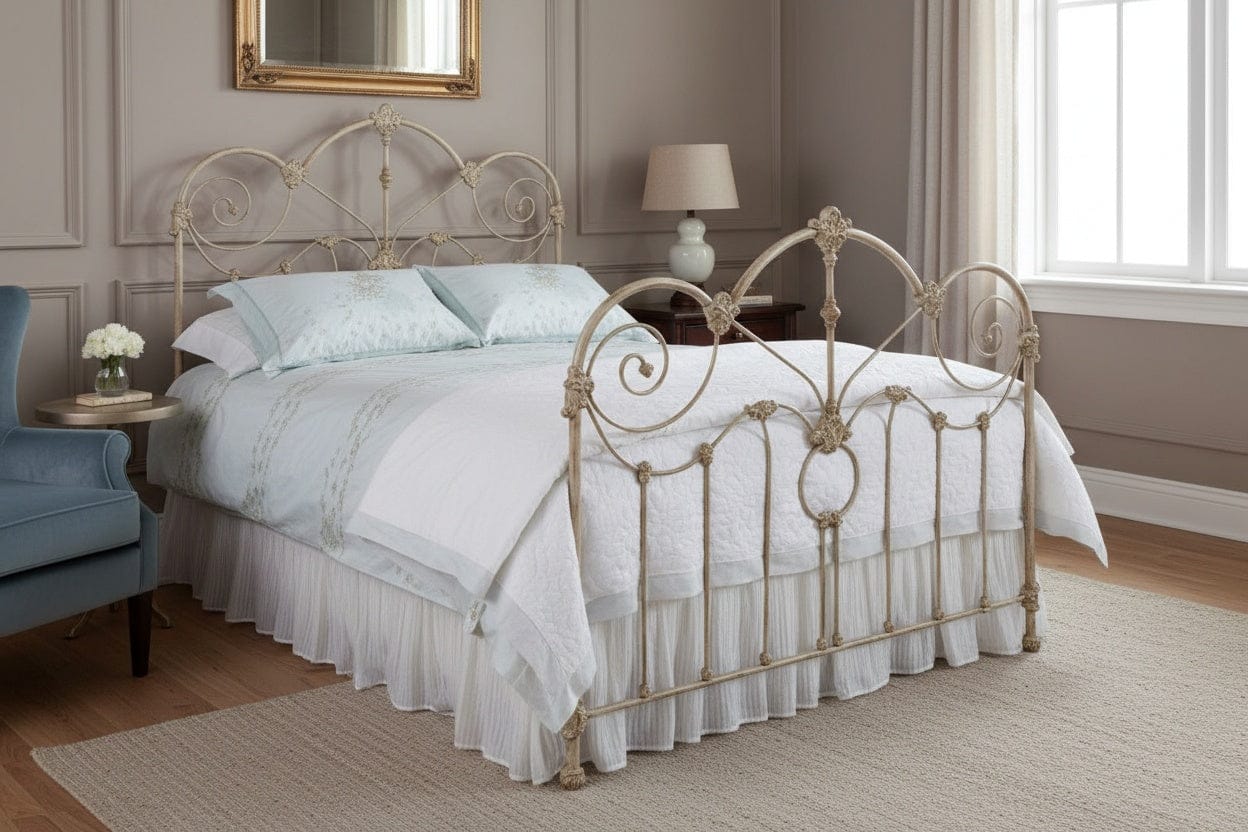
If you have searched for "rod iron beds" and ended up on a page about wrought iron, you are not alone. The two terms get used interchangeably across the industry, and most shoppers are not sure whether they are looking at the same product or two different things.
Here is the short answer: they are the same thing. "Rod iron" is a colloquial way of saying "wrought iron," and both describe the same kind of handcrafted iron bed frame. The longer answer, which explains where the confusion comes from and what to actually look for when you shop, is what the rest of this guide covers.
We have been building iron beds by hand in Los Angeles by our manufacturing partners since 1999. In that time, we have heard every variation of the name: rod iron, wrought iron, iron rod, even "rot iron." They all point to the same product.
Rod Iron vs Wrought Iron: Are They the Same Thing?
Yes. "Rod iron" is an informal term for "wrought iron." The two phrases describe the exact same type of bed.
The confusion comes from how the bed actually looks. When you see a wrought iron bed in person, the most visible feature is the iron rods: the vertical spindles in the headboard, the horizontal bars across the foot, the decorative scrollwork along the sides. People started calling them "rod iron beds" because that is what your eye sees first. The name stuck, and now it shows up everywhere from Google searches to mass-market retailer listings.
The technically correct term is "wrought iron." The word "wrought" means "worked" or "shaped." Wrought iron is iron that has been heated and physically formed by hand or by machine into a finished shape. That is exactly what happens when an iron bed is built. Steel tubing and solid iron rod are cut, bent, welded, and assembled into a frame. The work is what makes it wrought.
Both terms describe the same product. If you find a "rod iron bed" you love and a "wrought iron bed" you love, you are comparing two beds in the same category. The real questions are about quality and construction, not terminology.
For a deeper look at the wrought iron category specifically, see our wrought iron beds guide.
How Rod Iron (Wrought Iron) Beds Are Actually Made
Understanding how these beds are built is the best way to evaluate one before you buy. The process is more involved than most people realize.
Quality rod iron beds start with heavy-gauge steel tubing. This is the structural backbone of the frame: the headboard posts, footboard posts, side rails, and cross supports. Steel tubing is used because it has the right combination of strength and flexibility. It bends slightly under load rather than cracking, which is what allows a well-built iron bed to last for generations.
Solid iron rod is then used for the visible vertical and horizontal elements. These are the spindles that run between the top and bottom rails of the headboard, the decorative bars, and the scrollwork that gives each bed its character. Solid rod is heavier and stronger than hollow tubing, and you can feel the difference when you touch it.
Hand-poured castings are added at the joints, finials, and ornamental points. These are the decorative details that finish the look: the rosettes at corner connections, the finials topping each post, the curved scrollwork that turns a plain frame into something worth looking at. The castings also reinforce the structural joints where the most stress is concentrated.
Each component is welded together, ground smooth, and then finished by hand. A quality rod iron bed has welds you cannot see. Cheap imports leave visible seams, lumps, and rough spots where the welder rushed through.
Hand-applied finishes are unique to each piece. Color and patina will vary naturally. Images shown are for reference only.
For a closer look at how this kind of construction differs from mass production, see our hand-forged vs machine-made iron beds guide.
What to Look for When Shopping for Rod Iron Bed Frames
Once you understand that "rod iron" and "wrought iron" mean the same thing, the next step is learning how to tell a good one from a bad one. Here is what actually matters.
Tubing Thickness
The single biggest quality indicator on a rod iron bed is how thick the steel tubing is. Heavy-gauge, thick-walled tubing gives the frame real weight and structural rigidity. Thin-walled tubing flexes under pressure, dents easily, and can warp at stress points over time. If a queen-size frame feels light enough to lift with one hand, the tubing is probably too thin to last.
Solid Rod vs Hollow Tube for Spindles
The vertical spindles in the headboard are a giveaway. On a quality rod iron bed, these are solid iron rod. They feel heavy, they ring slightly when tapped, and they never flex. On a cheap copy, the spindles are hollow tube, often dressed up to look solid. Hollow spindles bend, dent, and rattle.
Quality of Welds
Run your hand along the joints where two pieces of metal meet. On a quality bed, the welds are ground smooth and finished so you cannot see where one piece ends and the next begins. On a low-quality bed, the welds are visible: bumpy seams, rough patches, and sometimes drips of metal that were never cleaned up. Visible welds are a sign that the manufacturer cut corners on finishing.
Finish Application
Hand-applied finishes look different from spray-on finishes, even in photos. A hand-applied finish has subtle variation in color, depth around the casting details, and a surface that catches light differently from different angles. A sprayed finish looks flat and uniform. Hand application also lasts longer because the finish penetrates the metal surface rather than sitting on top of it.
Weight as a Quality Indicator
Quality rod iron beds are heavy. A queen-size frame typically weighs between 100 and 150 pounds depending on the design and how much casting work it includes. That weight is the result of thick tubing, solid rod, and real castings. If a full-size iron bed weighs 40 or 50 pounds, you are looking at thin tubing and stamped decorative pieces dressed up to look like the real thing.
Rod Iron Bed Styles and Sizes
Rod iron beds are available in every standard mattress size: twin, full, queen, king, and California king. They are not antiques restricted to old mattress dimensions. Modern manufacturers build them to current bedding standards so any new mattress fits without modification.
Style range is broader than most people expect. On one end are the ornate Victorian-inspired designs with intricate scrollwork, tall headboards, and dense casting detail. On the other end are clean, modern frames with simple horizontal bars and minimal ornamentation. In between are transitional designs that mix traditional construction with contemporary lines.
Finish options run the full range too. Classic matte black is the most common, but quality manufacturers also offer aged bronze, antique brass, hammered pewter, weathered patinas, and custom finishes that pair with specific decor styles. The finish can completely change how the same frame reads in a room.
Browse our full range of iron bed collections to see how the style and finish options work in practice.
Frequently Asked Questions
Ready to Find Your Perfect Iron Bed?
Browse our collection of handcrafted iron beds, each built to last a lifetime in Los Angeles by our manufacturing partners.
iron bed collectionsAmerican Iron Beds
Handcrafting Iron Beds in Los Angeles Since 1999
Founded in 1999, our iron beds are handcrafted in Los Angeles by our manufacturing partners using construction methods proven since the late 1800s — thick-walled steel tubing, solid iron rod, and hand-poured metal castings. Every bed comes with a lifetime structural warranty.
Continue Reading
 Iron Beds & Frames
Iron Beds: The Complete Buyer's Guide for 2026
Everything you need to know before buying an iron bed frame: types, styles, sizes, construction quality, and care. A comprehensive buyer's guide from a manufacturer with 27+ years of experience.
 Wrought Iron Beds
Wrought Iron Beds: Styles, Strength & How to Choose the Right One
Everything you need to know about wrought iron beds: styles from Victorian to industrial, construction quality, sizing, finishes, and how to choose the right one.
 Iron Beds & Frames
Hand-Forged vs Machine-Made: Why Iron Bed Craftsmanship Matters
Learn the real differences between handcrafted and mass-produced iron beds. Compare construction, materials, finishes, and durability before you buy.
Iron Beds & FramesCast Iron Bed Frames: What to Know Before You Buy
Learn the difference between cast iron and wrought iron bed frames. How to evaluate quality, what to look for, and where to find real iron construction.