Modern vs Traditional Iron Beds: Finding Your Style
By American Iron Beds · Handcrafting Iron Beds in Los Angeles Since 1999
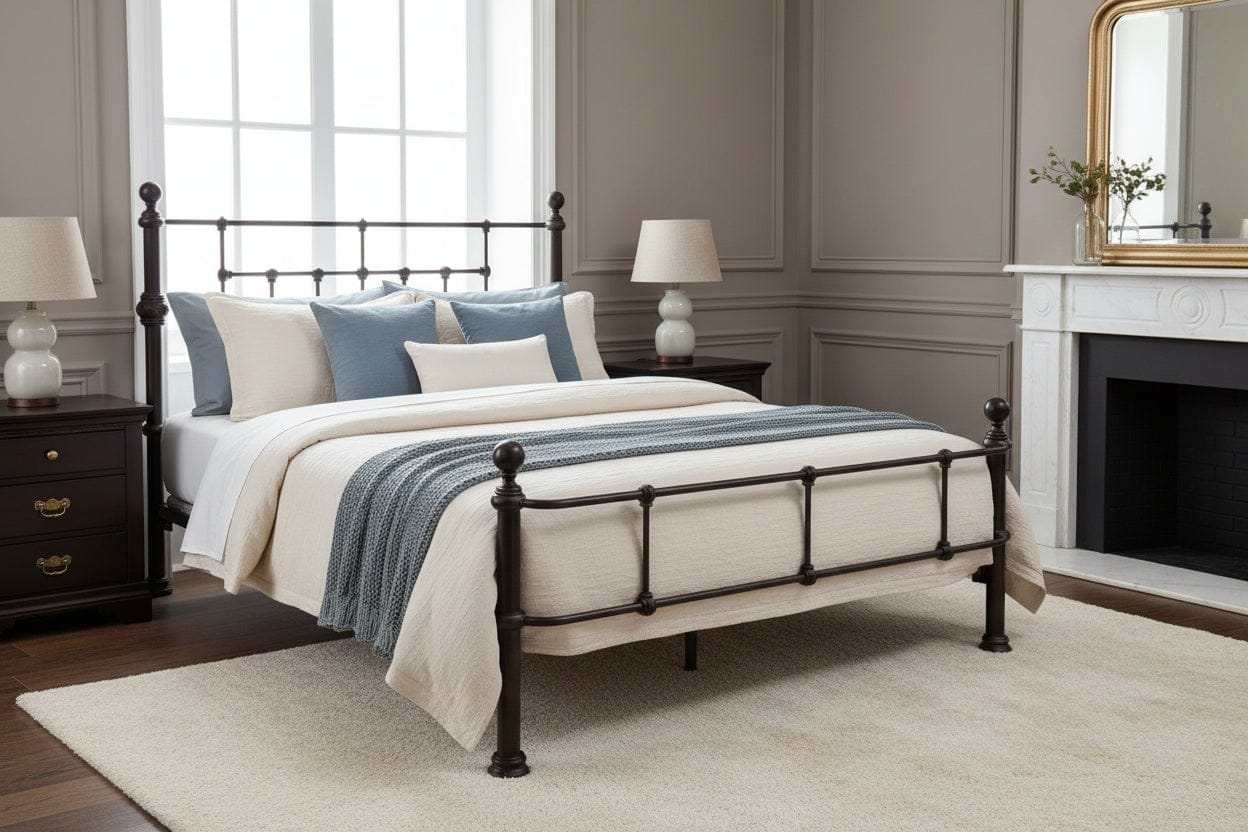
Modern and traditional iron beds answer the same buyer goal (a quality iron frame that anchors a bedroom for the long term) in very different visual languages. A modern iron bed, also called a contemporary iron bed frame, reads as clean, structural, and confident. A traditional iron bed reads as ornate, romantic, and grounded in 150 years of design heritage. Both iron bed styles are timeless when chosen for the right room. The decision is less about which style is better and more about which one matches the bedroom you already have, the furniture you already own, and the mood you want to walk into every day.
This guide is for buyers comparing modern and traditional iron beds, transitional designs that sit between the two, and the practical questions that decide which direction makes sense for a specific room.
What defines a modern iron bed
Modern iron beds tend to share four design traits that distinguish them from their traditional counterparts.
Clean horizontal and geometric lines. Modern iron bed headboards are typically built around straight horizontal bars, simple grid patterns, or restrained geometric shapes rather than curved top rails or scrollwork. The geometry reads as structural rather than decorative.
Minimal or no decorative castings. The hand-poured metal castings that anchor a traditional iron bed are absent or heavily restrained on modern designs. Where they appear, they tend to be simple geometric shapes rather than floral or organic motifs.
Lower profile, often with platform construction. Modern iron beds frequently sit lower to the floor than traditional designs, and many use platform construction (built-in slat support, no box spring needed) for a cleaner horizontal proportion.
Restrained finishes. Modern iron beds usually wear cleaner, less weathered finishes: Matte Black, Matte White, or solid colors without distressed character. The finish supports the geometry rather than adding visual complexity.
Our Iron Art collection is built around exactly this design language, and includes the Surround platform variants (Blake Surround, Braden Surround, Sheffield Surround, Sunset Surround, Quati Surround) that are the most modern-leaning iron beds we offer. For deeper styling direction on contemporary iron beds, see our guide to modern wrought iron bed ideas.
What defines a traditional iron bed
Traditional iron beds carry the design language of late 19th century American and British iron bed makers, and the visual content is meaningfully heavier than modern designs.
Curved silhouettes and scrollwork. Traditional iron bed headboards almost always feature curved top rails, S-curves and C-scrolls in the spindle patterns, and decorative shapes that read as ornamental rather than structural.
Hand-poured decorative castings. At the corners, joints, and intersections of the headboard, traditional iron beds use organic-motif castings: floral patterns, leaf shapes, rosettes, stylized acorns. The castings are both structural and decorative.
Tall, statement headboards. Traditional iron beds typically feature headboards 55 to 65+ inches tall, designed to be the room's defining design element rather than a backdrop.
Decorative finials. The corner posts on traditional iron beds usually terminate in decorative finials: turned spheres, ornate caps, or stylized urn shapes that add additional vertical presence.
Warmer, more weathered finishes. Traditional iron beds work particularly well in Antique Black, Antique Bronze, Antique Gold, Distressed White, and the premium Black Gold and Smokey Gold finishes. These finishes carry hand-rubbed character that pools naturally in the recesses of the castings and scrollwork.
Our American Classics collection is the core traditional offering, ranging from moderately ornate to heavily decorated Victorian-inspired designs. Our Dream Gallery collection is the most premium and dramatic, with canopy and four-poster designs that scale traditional ornamentation to its most ambitious expression. For the deeper history and design language, see our guide to Victorian iron beds.
Transitional iron beds: the middle ground
Most buyers do not want a strictly modern or strictly traditional iron bed. They want something that nods to one direction without committing fully, which is where transitional designs come in.
A transitional iron bed typically features traditional proportions (tall headboard, vertical spindle pattern) with restrained decorative elements (minimal castings, simpler finials, cleaner top rails). The result is an iron bed that reads as classic without being ornate, traditional without being formal.
Our North Haven Traditions collection sits in this transitional space. The collection uses traditional silhouettes with restrained decoration, which makes the designs work in both contemporary and traditional bedrooms. For buyers who want a quality iron bed but are not committed to either extreme, transitional designs are usually the safest choice.
Modern vs traditional vs transitional: at a glance
| Element | Modern iron bed | Transitional iron bed | Traditional iron bed |
|---|---|---|---|
| Lines | Straight, horizontal, geometric | Vertical spindles, gently arched top rails | Curved, ornate, scrollwork throughout |
| Castings | Minimal or absent | Restrained, simple shapes | Heavy, organic floral motifs |
| Headboard height | 40 to 55 inches | 50 to 60 inches | 55 to 65+ inches |
| Finials | None or capped | Simple turned shapes | Decorative spheres, urns, ornate caps |
| Best finish | Matte Black, Aged Steel, Matte White | Antique Black, Aged Bronze, Distressed White | Antique Bronze, Antique Gold, Black Gold |
| Best for | Industrial, contemporary, minimalist rooms | Most bedrooms; safest default | Victorian, French country, romantic, traditional rooms |
| Our collection | Iron Art | North Haven Traditions | American Classics, Dream Gallery |
How to decide which style is right for your bedroom
Four practical questions usually resolve the modern-versus-traditional decision faster than abstract style discussion.
What is the rest of the room already doing? The bed should coordinate with the room's existing palette, furniture, and architecture. A traditional iron bed in a room with mid-century furniture and modern art fights itself. A modern iron platform bed in a Victorian-era house with original moldings and hardwood floors reads as oddly stripped-down. Match the bed to the room's existing direction, not against it.
What is the ceiling height? Tall traditional headboards (60+ inches) and four-poster designs need 9-foot or higher ceilings to read correctly. Modern low-profile iron platform beds work in any ceiling height and are often a better choice in standard 8-foot rooms. For more on how this plays out in primary bedrooms, see our guide to iron beds for the master bedroom.
What furniture do you already own? Traditional iron beds pair more easily with warm wood furniture, antique pieces, and traditional silhouettes. Modern iron beds pair more easily with painted wood, mid-century furniture, and clean-lined contemporary pieces. The iron bed sets a direction the rest of the room needs to support. For deeper finish-coordination guidance, see our guide to matching iron bed finishes to your bedroom decor.
How much visual content do you want in the room? Traditional iron beds add significant visual weight: ornate scrollwork, decorative castings, tall headboards. Modern iron beds add structural weight without visual complexity. If your bedroom already has busy wallpaper, layered textiles, or rich textures, a modern iron bed keeps the room from tipping into overstuffed. If the room is currently spare, a traditional iron bed adds the kind of focal point spare rooms benefit from.
Can you mix modern and traditional elements?
Yes, and intentional mixing is one of the most successful design strategies for iron bed bedrooms. The trick is balance: one strong direction with selective contrast, not a 50/50 split.
A traditional iron bed in an otherwise modern room reads as a confident statement piece rather than a costume. The Victorian-inspired bed becomes the focal point because everything else stays restrained. This is how most successful traditional iron beds land in current interiors.
A modern iron platform bed in an older or character-rich house reads as deliberately collected rather than tone-deaf to the architecture. The clean modern bed against original moldings, hardwood floors, and warm wall colors creates contrast that feels intentional.
A transitional iron bed in nearly any room is the safest path. The North Haven Traditions silhouettes work in modern, traditional, farmhouse, and eclectic interiors equally well because they do not commit fully in either direction.
The combination to avoid is multiple competing decorative directions: a traditional iron bed plus traditional furniture plus traditional wallpaper plus traditional accessories plus traditional lighting reads as themed rather than designed. Pick a direction, commit, and let one or two contrasting elements add interest.
The most common mistake
Buyers often try to match every element in a bedroom to the bed's style direction, which is usually a mistake. A traditional iron bed does not need traditional everything around it. A modern iron bed does not need a fully modern room. The best iron bed bedrooms tend to commit to one strong direction and then add one or two intentionally contrasting elements (a modern light fixture in a traditional room, a vintage rug in a modern room) that keep the space from feeling themed.
Where to go from here
For specific style direction across the iron bed cluster, the following guides cover the main directions in depth:
- For traditional and Victorian-leaning rooms, see our guides to Victorian iron beds and French country and cottage iron bed styling.
- For modern and industrial rooms, see our guides to modern wrought iron bed ideas and rustic and industrial iron bed ideas.
- For farmhouse and country rooms, see our guide to farmhouse iron bed ideas.
- For the construction markers that separate a quality iron bed from a cheap one across any style direction, see our guide to what to look for in a quality iron bed.
Frequently Asked Questions
Ready to Find Your Perfect Iron Bed?
Browse our collection of handcrafted iron beds, each built to last a lifetime in Los Angeles by our manufacturing partners.
Iron Art collectionAmerican Iron Beds
Handcrafting Iron Beds in Los Angeles Since 1999
Founded in 1999, our iron beds are handcrafted in Los Angeles by our manufacturing partners using construction methods proven since the late 1800s — thick-walled steel tubing, solid iron rod, and hand-poured metal castings. Every bed comes with a lifetime structural warranty.
Continue Reading
 Style & Room Guides
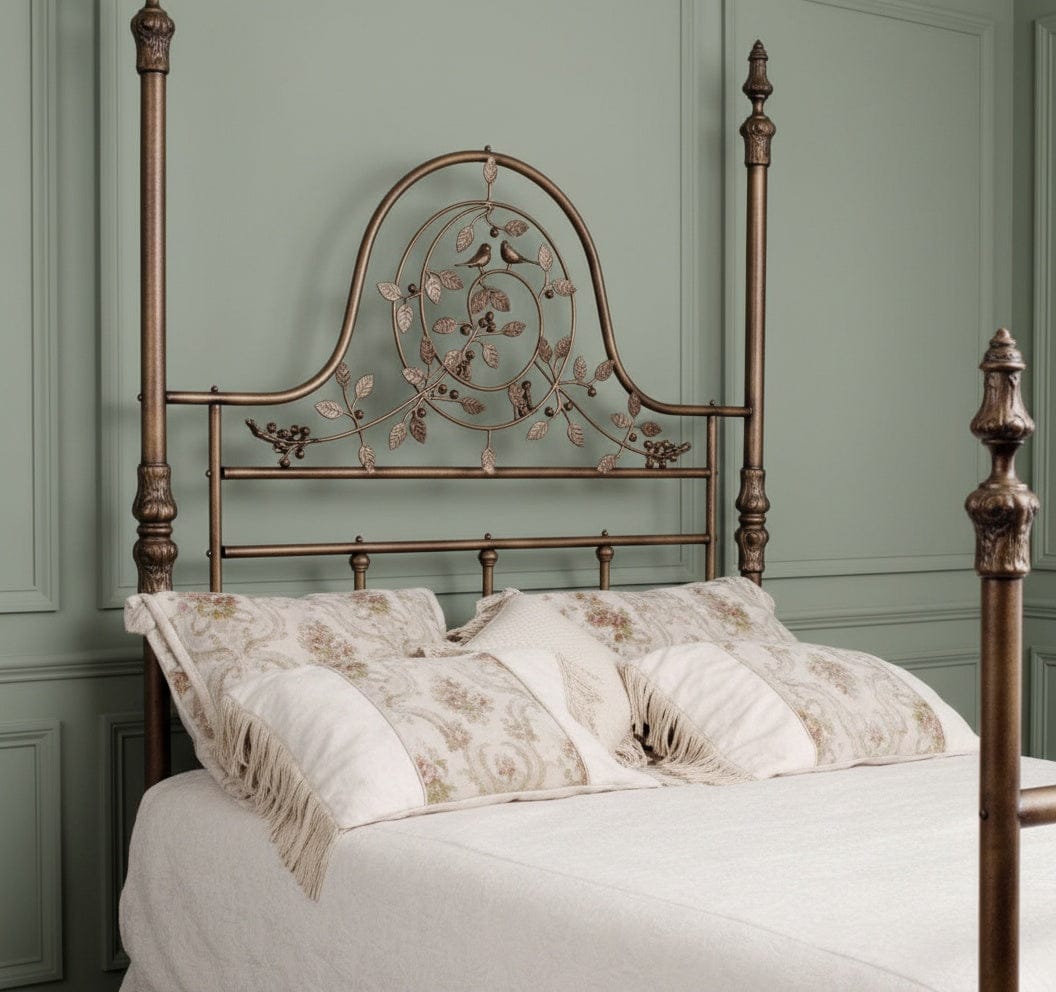
Victorian Iron Bed Style Guide: Ornate Designs for Modern Homes
Victorian iron beds bring ornate elegance to modern bedrooms. Learn how to style intricate castings and scrollwork without making your room feel dated.
 Wrought Iron Beds
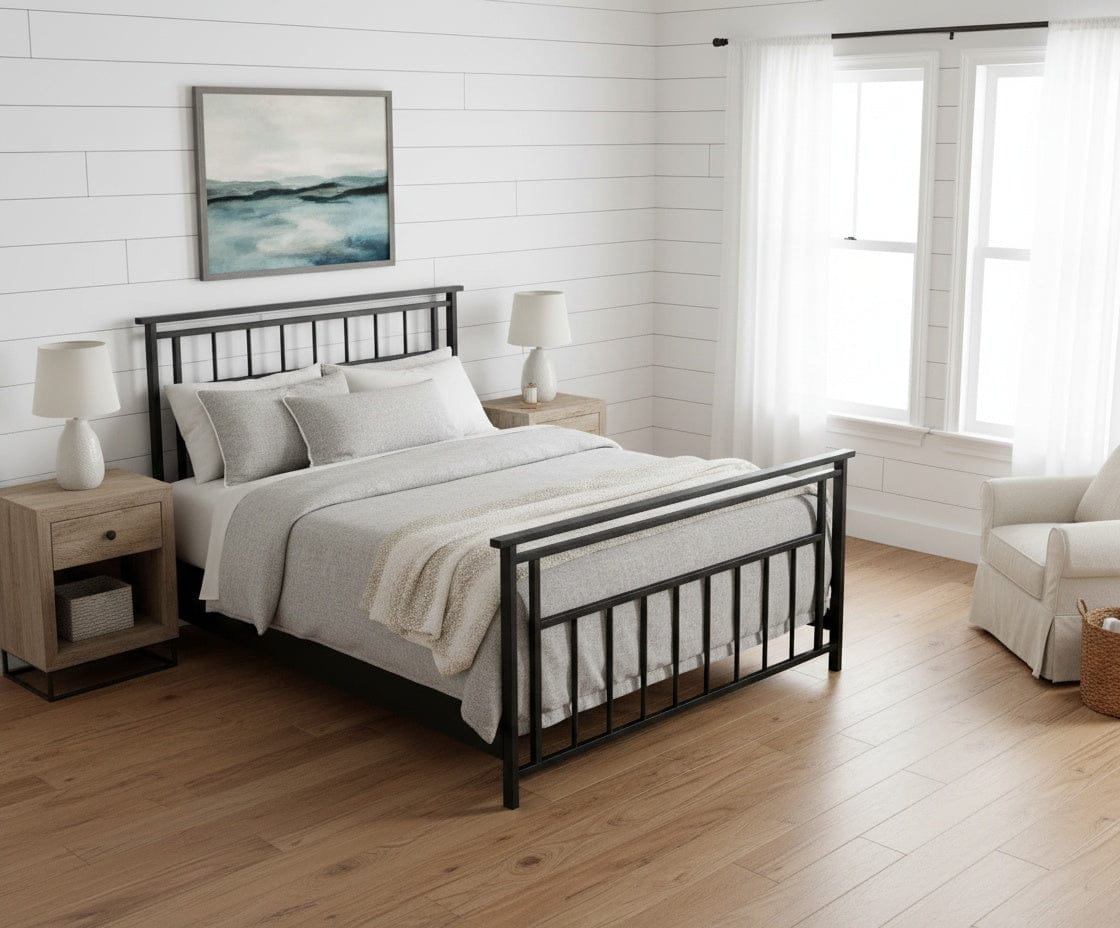
Modern Wrought Iron Bed Ideas: Industrial Loft to Coastal Farmhouse
Wrought iron bed design ideas for every style: industrial, Victorian, farmhouse, coastal, bohemian, and modern. See finish pairings and room styling tips.
 Style & Room Guides
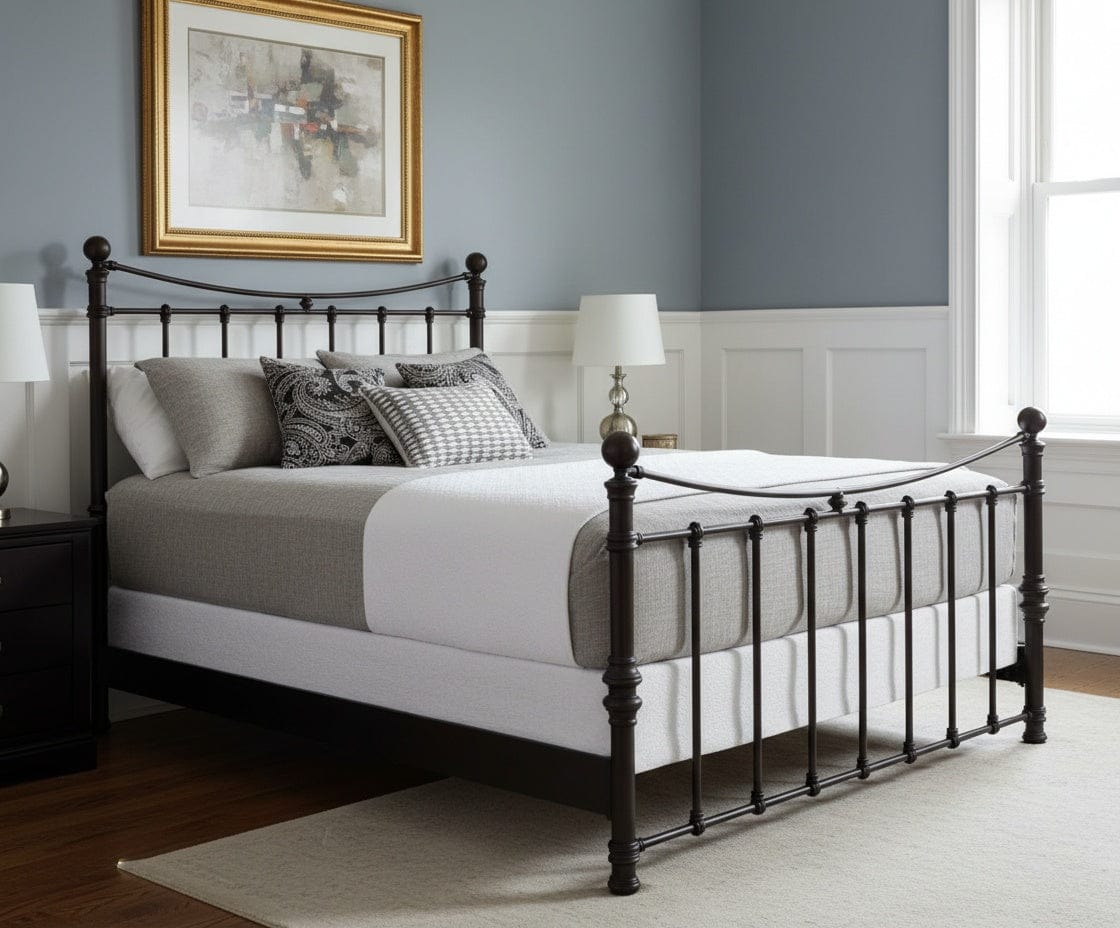
Rustic & Industrial Iron Bed Ideas for Modern Spaces
Iron beds are a natural fit for rustic and industrial bedrooms. Find the right frame style, finish, and styling approach for lofts, cabins, and modern spaces.
 Style & Room Guides
Farmhouse Iron Bed Ideas: Rustic Charm Meets Heirloom Quality
Iron beds are the natural choice for farmhouse bedrooms. Find the right style, finish, and design to create an authentic rustic retreat.